

Grout Solutions
Best Home Tile and Grout Cleaning Machine
May
A tile floor can look clean from standing height and still tell a different story up close. The grout is darker than it used to be, the shower corners have that stubborn haze, and scrubbing by hand starts feeling like a weekend you would rather get back. If you are shopping for the best home tile and grout cleaning machine, the real question is not just which machine is strongest. It is which one actually matches the kind of buildup you have, the surface you are cleaning, and the result you want.
That distinction matters because homeowners often expect one machine to do everything. It rarely works that way. Some machines are great at loosening oily soil on textured kitchen tile. Others are better for maintenance cleaning in bathrooms. And some are marketed like miracle tools but mainly move dirty water around while the grout lines stay stained.
What the best home tile and grout cleaning machine really does
A good machine helps in three ways. It adds agitation, it manages moisture better than a rag or mop, and it cuts down the physical effort needed to clean large areas. That can be a big win on porcelain tile, ceramic floors, mudrooms, laundry rooms, and shower surrounds where residue builds up in layers.
What it does not always do is reverse permanent discoloration. That is where people get disappointed. If grout is stained deep below the surface, a machine may clean off the top layer but still leave the joints uneven or dingy. In those cases, cleaning is still worth doing first, but restoration may require a color sealer afterward to restore a uniform look and lock in stain protection.
The main machine types and who they suit best
The best choice depends less on brand hype and more on cleaning method. For home use, most tile and grout machines fall into three practical categories.
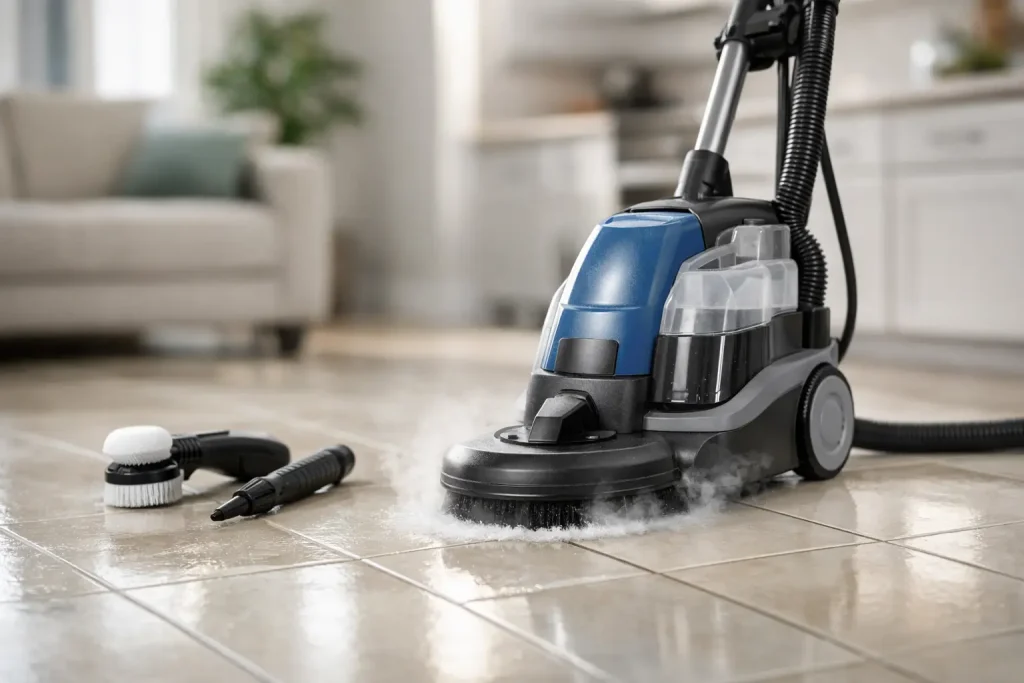
Steam cleaners
Steam machines use heat to loosen soil, soap scum, and light grime. They are popular because they feel simple and chemical-light. For sealed ceramic and porcelain tile, they can be effective for maintenance cleaning, especially in showers and small bathroom floors.
The trade-off is that steam is not magic on deeply embedded grout staining. It can soften residue on the surface, but it often lacks the scrubbing force to pull years of discoloration out of porous grout. Steam also needs caution around natural stone, damaged grout, loose tiles, or surfaces with failing sealers. Too much heat and moisture in the wrong place can create new problems.
Spin scrubbers and motorized brush tools
These are often the most practical answer for homeowners who want visible improvement without hauling out a bulky machine. A powered brush head does what hand scrubbing does, only faster and with less strain on your knees and wrists. They work well on grout lines, shower walls, textured tile, and small to medium floor areas.
Their strength is targeted agitation. Their weakness is extraction. If the machine does not pick up loosened soil, you still need to wipe or rinse thoroughly, or the dirt can settle right back into the grout. For many homes, though, this category offers the best balance of price, ease, and real cleaning power.
Hard floor cleaners and extractor-style machines
These use water, cleaning solution, brushes, and suction to wash and recover dirty water in one pass or close to it. On larger tile floors, that can save a lot of time. They are especially helpful in homes with pets, kids, frequent foot traffic, or greasy kitchen residue.
Still, not every hard floor machine is built for grout. Some glide nicely over smooth tile but barely reach into recessed grout lines. If the brushes are too soft or the suction path is too broad, the tile looks better while the grout still looks tired. If you go this route, brush design matters more than fancy features.
How to tell which machine is actually right for your home
Before you buy, look at the tile you have and the mess you are dealing with. Smooth porcelain in a powder room needs a different approach than rough slate-look ceramic in an entryway. A shower with soap scum and body oil is different from a kitchen floor with grease film.
If your main problem is routine soil on sealed tile, a steam cleaner or hard floor machine may be enough. If your grout lines are visibly darker than their original color, a motorized scrubber paired with a proper grout cleaner usually gives better results. If the grout is blotchy, permanently stained, or has years of failed mop residue built up on it, no machine alone is likely to produce that fresh, even finish people expect.
That is also why the best home tile and grout cleaning machine is often part of a system, not a stand-alone fix. Mechanical action matters, but chemistry matters too. The right cleaner breaks down the soil so the machine can do its job. Follow-up maintenance keeps the surface from slipping right back to where it started.
Features worth paying for and features you can skip
Brush stiffness is one of the most important details. Soft rollers may be fine for general floor washing, but they do very little for grout lines with packed-in dirt. Interchangeable brush heads are useful because they let you switch from broad floor cleaning to tighter detail work around shower corners and edges.
Tank capacity matters if you have a lot of square footage. A tiny tank makes a machine feel convenient at first, then annoying by the third refill. Weight matters too, especially if you will carry it upstairs or use it on vertical surfaces.
Cordless models are convenient, but battery life can be underwhelming on larger jobs. For quick touch-ups they are great. For full-floor restoration, a corded machine often delivers more consistent power. Suction recovery is worth paying for if you want less mess and faster dry time. App features, lights, and extra modes are usually less important than solid brush contact and easy cleanup.
Where machines help most and where they fall short
Machines shine on maintenance cleaning and on surface-level buildup. They are excellent for keeping tile looking sharp once you have already restored it. They are also good for cutting through everyday grime before it becomes a major project.
Where they fall short is on grout that has changed color from age, contamination, or staining below the surface. Many homeowners keep buying stronger tools when the real issue is that the grout no longer needs just cleaning. It needs renewal. Cleaning first removes residue and exposes the true condition of the grout. After that, a professional-grade color sealer can take it the rest of the way by evening out the color and adding long-term stain resistance.
That is often the turning point in a bathroom or kitchen makeover. Instead of replacing tile or digging out grout, you clean thoroughly, correct the color, and protect it. The surface looks restored right back to new without the mess of demolition.
A smarter way to shop for results
If you are comparing machines, avoid thinking in terms of the most powerful unit on the shelf. Think in terms of your actual finish line. Do you want easier weekly upkeep, or are you trying to fix years of visible discoloration before guests arrive or a home goes on the market?
For weekly upkeep, a compact machine that is easy to grab will probably get used more often, which matters. For deep cleaning, prioritize agitation and recovery. For showers and tight grout lines, a powered scrubber may outperform a larger floor machine simply because it reaches the problem spots better.
And if your grout still looks uneven after a proper deep clean, that is not failure. It is a sign that cleaning did its job and showed you what comes next. This Old Grout has built its reputation on that exact reality – restore first, then protect. In many homes, the best machine is the one that gets the surface truly clean enough for the next step, whether that is routine maintenance or a stain-free makeover with color sealing.
The bottom line on the best home tile and grout cleaning machine
The best machine for one home can be the wrong one for another. Steam is helpful for light maintenance. Extractor-style floor machines are useful on larger tile areas. Motorized scrubbers are often the strongest all-around choice for homeowners who want real grout-line cleaning without overcomplicating the job.
But the bigger truth is this: a machine helps most when you use it with the right cleaner and realistic expectations. Clean away the buildup, see the surface clearly, and then decide whether you need maintenance or restoration. That is how you get a floor or shower that does not just look cleaner for a day, but looks renewed in a way you can enjoy every time you walk into the room.
