

Grout Solutions
What Cleans Tile and Grout Best?
May
You notice it when the room is otherwise clean. The counters are wiped down, the glass looks decent, the floor has been swept – but the grout still makes everything look tired. If you are wondering what cleans tile and grout best, the honest answer is not one miracle product. It depends on what is actually sitting on the surface, how porous the grout is, and whether you are cleaning, restoring, or trying to cover years of staining that cleaning alone will not fix.
That distinction matters because tile and grout do not fail in the same way. Tile is usually easier to clean because it is less porous. Grout is where the trouble starts. It grabs onto grease in kitchens, soap scum in showers, mineral buildup from hard water, and deeply embedded soil on floors. A cleaner that cuts one kind of mess beautifully can do very little on another. That is why so many homeowners scrub hard and still feel like the floor never gets fully clean.
What cleans tile and grout best depends on the mess
For everyday soil, a quality alkaline cleaner usually does the heavy lifting. Alkaline formulas are especially effective on grease, body oils, tracked-in dirt, and the dingy film that builds up over time on textured tile and grout lines. This is the category that tends to give the best visible transformation on kitchen floors, entryways, and general household buildup.
In showers and wet areas, the problem often shifts. Soap scum, hard water residue, and mineral deposits can create a chalky or hazy layer that keeps tile from looking bright no matter how much you wipe. In that case, an acid-based cleaner may be more effective on the tile surface itself, but you have to use it carefully. Acid can be the wrong choice for certain surfaces, especially natural stone, and overuse can damage grout or strip protective sealers.
Then there is stained grout. This is where expectations need to be realistic. If grout is discolored from years of spills, mildew staining, rust transfer, or absorbed grime, even a strong cleaner may only improve it, not restore it to an even like-new color. Cleaning removes contamination. It does not always reverse permanent staining.
Start by identifying the surface before you clean
Ceramic and porcelain tile are fairly forgiving, which is why many homeowners can get excellent results with the right cleaner, a brush, and some dwell time. Natural stone is a different story. Marble, travertine, limestone, and other calcium-based stones can be etched by acidic cleaners. What works great on shower tile may be a bad idea on stone flooring or a stone shower surround.
Grout itself also varies. Sanded, unsanded, cement-based, epoxy, and previously sealed grout all respond differently. Older cement grout is the most likely to absorb stains and look patchy. If it has never been properly sealed, dirt can settle deep below the surface. At that point, cleaning is still the right first step, but it may not be the final step.
This is where a lot of frustration comes from. People ask what cleans tile and grout best, but the better question is often, what will clean it enough to tell me whether I need restoration too?
The best cleaning process is usually more important than the cleaner
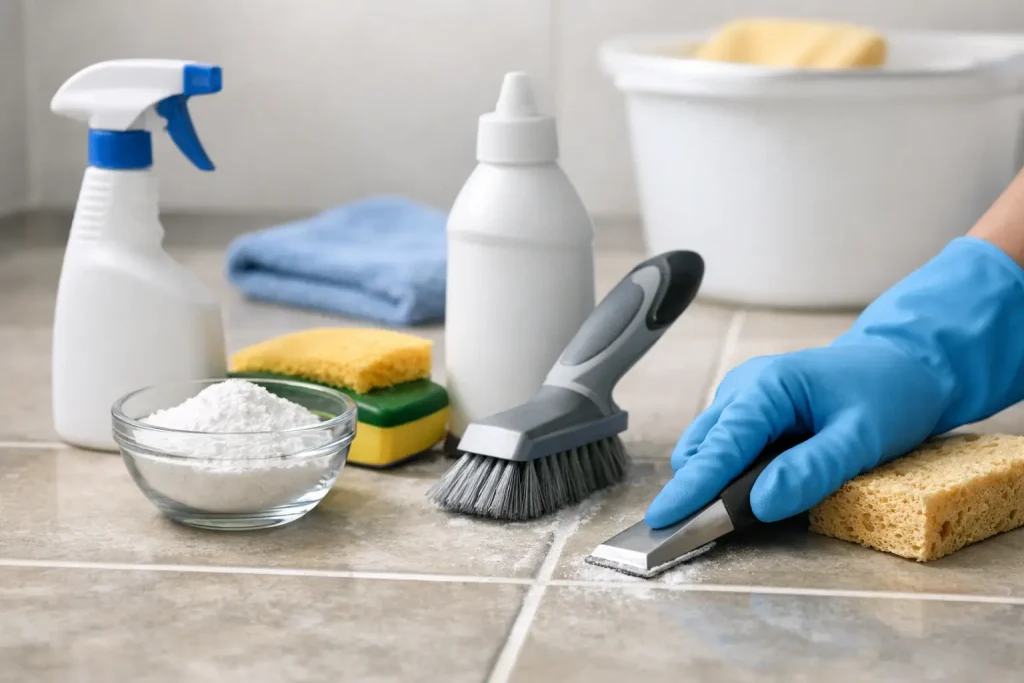
A good product matters, but technique changes the result. The biggest mistake is spraying a cleaner and wiping it off too quickly. Most tile and grout cleaners need a few minutes to break down soil. If you apply, let it dwell, agitate with a grout brush, and then rinse thoroughly, you will usually see a much stronger result than with quick surface wiping.
Hot water helps. So does using the right brush. A soft cloth can clean tile faces, but grout lines need more targeted agitation. You do not need to attack them with a metal brush or anything overly aggressive. A firm grout brush is usually enough to pull loosened soil from the pores without damaging the joints.
Extraction also matters more than people think. If dirty solution stays on the floor, some of that grime can settle right back into the grout. On larger areas, a wet vacuum, microfiber mop, or repeated rinsing can make the difference between cleaner grout and grout that still looks dull.
Best cleaner by situation
If your kitchen floor looks greasy or gray, an alkaline deep cleaner is usually your best bet. It cuts cooking residue, food spills, and tracked-in dirt better than a mild everyday spray. This is the kind of cleaner that makes old tile floors look several shades brighter when used correctly.
If your shower has white crust, dull film, or stubborn soap scum, you may need a cleaner designed for mineral deposits and bathroom buildup. Just make sure it is appropriate for your tile and grout type. On natural stone, stick with stone-safe formulas. A harsh shortcut can create a whole new problem.
If mildew is the concern, especially in damp grout joints or caulk lines, you need a cleaner that addresses organic staining and allows enough contact time to work. Even then, some black or brown discoloration may be permanent if it has penetrated deeply or if the material has started to break down.
And if the grout is still blotchy after thorough cleaning, the issue is no longer just dirt. It is appearance restoration.
When cleaning is not enough
This is the part many articles skip. Sometimes grout is clean, but it still looks bad. That happens when the original color has worn unevenly, old stains have set in, or the grout has become permanently discolored from age and moisture. You can scrub for hours and still end up with grout that looks patchy.
That is when color sealing becomes the smarter fix. A professional-grade color sealer does two jobs at once. It restores a uniform grout color and adds stain protection so future maintenance is much easier. For many homeowners, this is the real answer after repeated cleaning attempts have reached their limit.
Instead of replacing grout or living with dark, inconsistent joints, you can restore the look of the surface without demolition. That is a major cost saver, especially in bathrooms, kitchens, and high-traffic floors where replacement gets messy fast. A restoration-first approach is often the difference between a weekend project and a full renovation headache.
A simple system usually works best
The most reliable approach is to clean deeply first, then protect. For heavily soiled tile and grout, start with a strong deep cleaner that removes oils, embedded dirt, and surface grime. Once the area is fully rinsed and dry, evaluate the grout honestly. If it looks clean but uneven, a color sealer can restore it right back to new while helping block future stains.
After that, maintenance gets much easier. A gentler everyday cleaner helps preserve the finish without leaving residue behind. This is where many surfaces go wrong again. People use heavy household soaps or all-purpose cleaners that leave a film, and over time the tile starts looking dingy even though it is technically being cleaned.
A better maintenance routine is simple and consistent. Clean spills quickly, rinse shower surfaces regularly, and use a pH-appropriate cleaner for the surface. That keeps buildup from turning into a restoration project every few months.
Common mistakes that make grout look worse
Bleach is one of the most misunderstood options. It can lighten some organic stains, but it is not the best all-purpose answer for dirty grout. It does little for grease or mineral scale, and repeated use can weaken some grout over time. It also tends to create a temporary brightening effect that fades when underlying soil remains.
Steam can be useful, but it is not automatically the best solution either. On some surfaces it works well as part of a cleaning process. On damaged grout, poorly sealed joints, or sensitive installations, too much heat and moisture can create problems. As with most things in surface care, more force is not always better.
Homemade mixtures get mixed results. Baking soda pastes and vinegar solutions are popular because they are easy and cheap, but they are not universally safe or effective. Vinegar is especially risky on natural stone and can dull certain surfaces. DIY methods may help with light soil, but they are rarely the best answer for deeply soiled grout that needs real restoration.
The right result is clean, even, and easier to maintain
If you want the shortest answer to what cleans tile and grout best, it is this: use the cleaner that matches the soil, the surface, and the condition of the grout. For general grime, a professional-grade alkaline deep cleaner usually delivers the best cleaning power. For mineral and soap buildup, a targeted bathroom cleaner may be better, as long as the surface can handle it. And when grout is permanently stained or uneven, cleaning alone is no longer the finish line.
That is where a restoration system earns its keep. Brands like This Old Grout focus on that next step – not just getting surfaces cleaner, but getting them back to a uniform, protected, professionally finished look without replacement.
If your tile is clean but the room still looks worn, trust what you are seeing. Sometimes the best cleaner is only part of the fix, and the real makeover starts when you stop scrubbing harder and start restoring smarter.
