

Grout Solutions
Top 10 Tile Grout Questions Homeowners Ask: Cleaning, Sealing, Stains, Cracks, and Restoration
Aug
Tile can stay attractive for many years, but grout often begins showing wear much sooner.
Floor grout gets darker. Shower joints become discolored. Kitchen grout collects grease and spills. In other areas, homeowners start seeing cracks or inconsistent color and wonder whether the entire tile installation needs to come out.
Fortunately, many grout problems do not require tile replacement.
The first step is understanding what you are actually dealing with. Dirty grout, permanently stained grout, cracked grout, and grout that simply needs protection are different problems. They also require different solutions.
At This Old Grout, we have spent decades focused on tile and grout restoration products for homeowners and professionals. The goal is to help restore existing surfaces when possible rather than assuming worn grout automatically means a complete tear-out.
Below are answers to 10 of the most common tile grout questions homeowners ask.
1. Why Does Grout Get Dirty Faster Than Tile?
Grout and tile often behave very differently.
Many ceramic and porcelain tiles have relatively smooth surfaces that are easy to wipe clean. Traditional cement-based grout, however, can be porous and textured. Dirt, oils, spills, soap residue, and cleaning solution can settle into those small pores.
Floor grout gets additional abuse from:
- Shoes
- Bare feet
- Pets
- Cooking grease
- Spills
- Dirty mop water
Bathrooms face another set of challenges. Shower grout can collect soap residue, body oils, minerals, shampoo, and other personal-care products.
As a result, the tile may still look clean while the grout slowly becomes darker.
Regular tile and grout cleaning helps prevent that buildup from becoming more difficult to remove.
2. What Is the Best Way to Clean Dirty Grout?
Start by identifying both the surface and the type of soil.
Do not automatically reach for the strongest cleaner in the cabinet. Stronger chemistry does not always mean better cleaning, and certain products can damage natural stone, grout, metal fixtures, or nearby finishes.
For general soil and oily residue, an appropriate alkaline cleaner can often provide an effective starting point. Routine maintenance may require only a milder cleaner.
The basic process usually involves:
- Remove loose dirt and debris.
- Apply the cleaner according to its directions.
- Allow the proper dwell time.
- Agitate the grout with a suitable nylon grout brush.
- Rinse thoroughly.
- Remove the dirty solution.
- Let the grout dry before judging the final color.
That final step matters.
Wet grout often looks darker and more uniform than dry grout. Always evaluate the result once the surface has dried.
3. Why Does My Grout Still Look Dirty After Cleaning?
Sometimes grout is no longer dirty. It is permanently discolored.
Grout can absorb pigments, oils, minerals, cleaning residues, and other contaminants over years of use. Previous repairs may also leave different sections of grout slightly different colors.
That creates the frustrating situation where the grout is technically clean but still looks stained.
Repeatedly attacking it with stronger chemicals may not solve the problem.
If the grout is sound and properly cleaned but the color remains uneven, grout color sealing may provide a more predictable restoration.
Instead of trying to force every grout joint back to its original color, a color sealer creates a more consistent finished appearance while adding protection.
4. What Is Grout Color Sealing?
Grout color sealing is a restoration process that applies a pigmented protective treatment to suitable grout joints.
It serves two purposes.
First, it helps create a more uniform grout color. Second, it helps reduce absorption and makes routine cleaning easier.
This can be especially useful when older grout has:
- Permanent stains
- Blotchy coloration
- Previous repairs
- Uneven fading
- Discoloration that cleaning cannot correct
You can often choose a color close to the original grout or change the appearance altogether.
For example, darker grout may create more contrast between tiles, while a closer color match can make a floor appear more continuous.
Preparation remains critical. The grout should be thoroughly cleaned, dry, and structurally sound before applying a color-sealing product.
5. Can I Change Grout Color Without Replacing the Grout?
In many cases, yes.
If the grout remains secure and in suitable condition, a professional-quality grout color sealer can change its finished appearance without requiring you to remove every grout joint.
That can make a dramatic difference in a room.
Changing grout color may help:
- Modernize older tile
- Reduce the appearance of uneven staining
- Coordinate grout with new décor
- Add contrast
- Create a more blended appearance
However, color sealing does not repair loose or badly deteriorated grout.
Fix structural problems first. Then address appearance.
6. Why Is My Grout Cracking?
Grout cracks for several possible reasons.
The tiled assembly may be moving. The substrate may flex. Installation conditions may have contributed to the problem. Cracks can also develop near transitions and movement areas.
A small isolated crack may only need localized attention.
However, recurring cracks deserve a closer look.
If grout repeatedly cracks in the same location, simply filling the joint again may not solve the cause.
Look for other warning signs, including:
- Loose tile
- Tiles that move
- Widespread cracking
- Missing grout
- Damp areas
- Failed caulk
- Cracks that return shortly after repair
Movement joints and changes of plane may also require a flexible material rather than rigid grout, depending on the installation.
The important lesson is simple: repair the reason for the failure when possible, not only the visible crack.
7. Should Cracked Grout Be Sealed?
Not before the damaged area has been evaluated and repaired.
A grout sealer protects suitable grout. It does not glue cracked grout together or correct movement beneath the tile.
If grout is loose, crumbling, or missing, address that condition first.
Once the repair has cured and the surface meets the requirements of the sealer, protection may make sense.
Trying to seal over failing grout may improve the appearance temporarily, but it does not create a sound repair.
8. How Often Should Grout Be Sealed?
There is no single answer that applies to every home.
Resealing frequency depends on:
- Grout type
- Sealer type
- Traffic
- Water exposure
- Cleaning products
- Maintenance habits
- Location
- Existing protective treatment
A busy kitchen floor may need different care from a lightly used guest bathroom.
Likewise, a shower receives regular water and cleaning exposure that a backsplash does not.
Follow the maintenance recommendations for the specific sealer you use rather than relying on a generic “every year” rule.
Also determine whether the grout already has a sealer or color sealer before adding another treatment.
9. Is Grout Sealer Really Necessary?
It can be very useful on appropriate porous grout.
A penetrating grout sealer helps reduce absorption, giving you more time to remove spills and contaminants before they soak deeply into the grout.
However, sealer does not make grout maintenance-free.
You still need to:
- Clean spills
- Sweep or vacuum floors
- Use appropriate cleaners
- Avoid unnecessary harsh chemistry
- Watch for cracks or damage
Think of sealer as added protection rather than permanent stain-proofing.
Clear penetrating sealers and grout color sealers also serve different purposes.
A clear sealer protects while preserving the existing appearance. A grout color sealer improves color consistency while providing protection.
The condition of your grout should guide the decision.
10. Can Old Grout Be Restored Instead of Replacing the Tile?
Very often, yes.
If the tile remains securely bonded and the grout problems mainly involve dirt, staining, or uneven color, grout restoration can significantly improve the appearance of the entire installation.
A restoration process may include:
- Deep cleaning
- Localized grout repairs
- Grout color sealing
- Clear sealing where appropriate
- Improved maintenance afterward
This can be a practical option for:
- Kitchen floors
- Bathroom floors
- Entryways
- Backsplashes
- Laundry rooms
- Other tiled areas
However, restoration has limits.
Loose tile, widespread movement, extensive grout failure, water intrusion, or substrate problems need proper corrective work. A cleaner or color sealer should never hide a larger installation failure.
What About Shower Grout?
Shower grout deserves extra attention because it deals with water, soap residue, body oils, minerals, and frequent cleaning.
Dark grout in a shower may come from several sources.
It could be surface soil. It may be embedded staining. Mineral buildup can also change the appearance.
Start by identifying the tile material.
Ceramic and porcelain tolerate different cleaning methods than marble, travertine, limestone, or other natural stone. Acidic cleaners that may help remove mineral deposits from an appropriate acid-resistant surface can permanently etch acid-sensitive stone.
Caulk also needs separate attention.
If shower caulk is cracked, separated, or deeply discolored, replacing the failed material may be more appropriate than repeatedly trying to clean it.
Common Grout-Cleaning Mistakes Homeowners Should Avoid
A few mistakes can make grout restoration harder than it needs to be.
Using Stronger Chemicals Every Time
More aggressive chemistry can affect grout, tile, natural stone, sealers, and surrounding finishes.
Mixing Cleaning Products
Never mix bleach, acids, ammonia, or other cleaning chemicals. Dangerous reactions can occur.
Scrubbing Damaged Grout Aggressively
If grout already feels sandy or loose, aggressive brushing may remove more material.
Sealing Dirty Grout
A sealer does not make contamination disappear. Clean and dry the grout properly first.
Treating Every Stain the Same Way
Grease, soap residue, hard-water minerals, rust, and permanent discoloration may require different approaches.
Testing a small area first can save considerable time and frustration.
Simple Ways to Keep Grout Looking Better
After cleaning or restoring your grout, routine care can help preserve the improvement.
Sweep or vacuum tile floors before mopping. This removes grit instead of pushing it into grout lines.
Clean spills promptly, especially cooking oils and dark liquids.
For showers, remove excess water when practical and maintain good ventilation.
Most importantly, use cleaners that match the surface.
Constantly attacking grout with harsh household chemicals can create unnecessary problems. A consistent maintenance routine usually works better than waiting until the surface requires aggressive cleaning.
Why Homeowners Choose This Old Grout
Replacing tile is not always the answer.
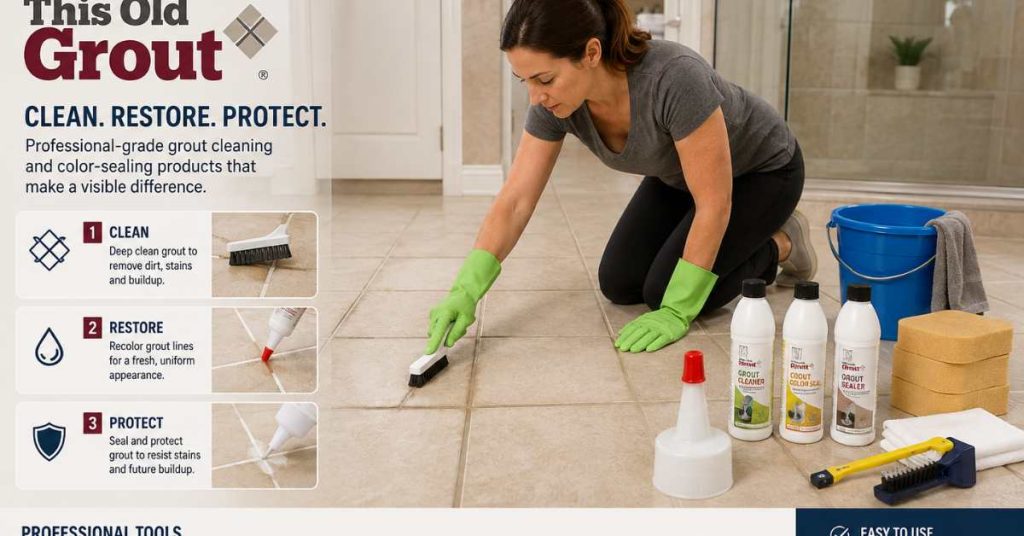
This Old Grout focuses on products that help homeowners clean, protect, and restore existing tile and grout.
That includes solutions for:
- Tile and grout cleaning
- Grout color restoration
- Grout sealing
- Surface maintenance
- Specialized cleaning needs
The goal is to help homeowners understand the condition first and then choose a product that addresses the actual problem.
If grout is simply dirty, clean it properly.
If it remains permanently stained after cleaning, color sealing may make more sense.
If it is cracked or deteriorated, repair comes first.
That approach produces better results than treating every grout problem with the same bottle.
Frequently Asked Questions
Can badly stained grout look new again?
Many stained grout lines improve dramatically with proper cleaning. If permanent discoloration remains, grout color sealing can create a more uniform finished appearance.
Can I put grout sealer over stained grout?
You should thoroughly clean the grout first. If permanent staining remains, a color sealer may be more appropriate than a clear penetrating sealer.
Does grout color sealer cover old stains?
A quality color sealer can help create a consistent finished color over properly prepared grout. The surface still needs to be cleaned and suitable for application first.
Is bleach the best grout cleaner?
Not necessarily. Bleach does not address every type of contamination, including many oils and mineral deposits. The cleaner should match the soil and surface.
Can grout be repaired without replacing tile?
Often, yes. Localized damaged grout can sometimes be repaired while leaving sound tile in place. Recurring or widespread failure may require further evaluation.
Why does my grout look darker when wet?
Porous grout absorbs water and often appears darker until it dries. This is one reason grout should be evaluated after drying rather than immediately after cleaning.
Can I change dark grout to a lighter color?
A suitable grout color-sealing system may allow you to change the finished color, provided the grout is properly prepared and in good condition.
When is tile replacement the better choice?
Replacement may be appropriate when tiles are loose or broken, the substrate is failing, widespread movement exists, or significant moisture problems have damaged the installation.
Final Thoughts
The answers to common tile grout questions usually start with one principle: identify the problem before choosing the solution.
Dirty grout may only need proper cleaning.
Permanently stained grout may benefit from color sealing.
Cracked or deteriorated grout needs repair before protection or cosmetic treatments go on.
Meanwhile, sound grout can often benefit from an appropriate sealer and a sensible maintenance routine.
Homeowners do not need to assume that tired-looking grout means an expensive tile replacement project.
This Old Grout provides contractor-grade cleaning, grout restoration, color-sealing, and maintenance products designed to help homeowners get more life and better appearance from tile they already own.
When the tile is still sound, restoring the grout may be the step that makes the entire surface look cared for again.
