

Grout Solutions
Can Grout Be Recolored? Yes – Here’s How
Jun
That moment when your tile still looks decent but the grout lines make the whole floor or shower look tired is usually when the question comes up: can grout be recolored? In most cases, yes. If the grout is intact and not crumbling, recoloring can give you a stain-free makeover without the mess, cost, and downtime of tearing it out.
For a lot of homeowners, this is the difference between living with dingy grout and restoring the whole room right back to new. Recoloring is not a gimmick, and it is not just paint in a different bottle. Done correctly, it can even out blotchy grout, cover permanent staining, and add long-term protection at the same time.
Can grout be recolored on any tile surface?
Grout can usually be recolored on ceramic and porcelain tile floors, backsplashes, shower walls, and many other tiled surfaces. The big qualifier is the condition of the grout itself. Recoloring works best when the grout joints are solid but discolored. If the grout is cracked throughout, missing in sections, soft, loose, or failing because of movement or moisture damage, color alone will not fix the underlying problem.
This is why two floors can look equally bad but need different solutions. One may only need a deep cleaning and a color sealer. The other may need repair first. A good rule is simple: if the grout is structurally sound, recoloring is usually on the table.
Natural stone adds a little more nuance. Recoloring grout around stone can work very well, but you need to be careful with prep and product choice because some cleaners or colorants are not stone-safe. Textured tile also takes a steadier hand, since excess product can catch on the surface if it is not wiped properly.
What grout recoloring actually does
A quality grout colorant changes the appearance of the grout joint while also creating a more uniform finish. If it is a true color sealer, it does more than shift the shade. It helps seal the grout surface against future staining, which is why the result tends to look cleaner for much longer than cleaning alone.
That distinction matters. Cleaning can remove surface soil, soap scum, grease, or hard water buildup, but it cannot always reverse deep-set discoloration, bleach damage, uneven original grout color, or years of absorbed staining. Recoloring covers those flaws and creates consistency from one joint to the next.
It also gives you options. You can refresh the grout back to its original shade, go darker to hide future traffic patterns, or lighten the look of the room with a brighter grout line. Many people assume they are stuck with whatever color the grout has become over time. They are not.
When recoloring makes sense and when it doesn’t
If your grout looks dirty no matter how much you scrub, recoloring is often the smarter move. It is especially effective when grout has turned uneven from mopping residue, old sealers, household cleaners, mildew staining, or years of use in kitchens and showers.
It also makes sense if the tile is still in good shape and replacement would be overkill. Regrouting an entire bathroom or kitchen is disruptive, time-consuming, and expensive compared with restoring the grout you already have.
There are times, though, when recoloring is not the first step. If you have active mold caused by an ongoing leak, loose tile, powdery grout, or major joint loss, those issues need to be addressed before any colorant goes on. Recoloring over a failing surface may look better for a short while, but it will not hold up the way it should.
Another it-depends situation is heavily contaminated grout. If the joints are coated with soap film, grease, mineral deposits, or leftover topical sealer, the new color may not bond evenly. In that case, prep is everything.
How to recolor grout the right way
Most grout recoloring problems come from rushing the prep, not from the recoloring itself. If you want a professional-looking finish, start with a truly clean surface.
Step 1: Deep clean first
Remove soil, grease, soap scum, and mineral buildup from the grout and tile. In kitchens, that often means cutting through oils and embedded grime. In showers, it usually means dealing with hard water residue and soap film. The goal is to get down to a clean, dry grout surface so the colorant can bond properly.
If the grout has any mildew or organic staining, handle that before recoloring. And if there is old sealer or coating left on the grout, that may need to be stripped or broken down. A surface can look clean and still have residue that interferes with adhesion.
Step 2: Let the grout dry fully
Dry time matters more than people think. Grout holds moisture, especially in showers and on bathroom floors. Applying color sealer too soon can affect bonding and cure. Give it enough time to dry thoroughly after cleaning.
Step 3: Repair damaged areas
Fill chips, patch missing spots, and address cracks where needed. Recoloring creates a uniform finish, but it cannot hide missing grout lines or unstable joints. Get the grout sound first, then move to color.
Step 4: Apply the color sealer carefully
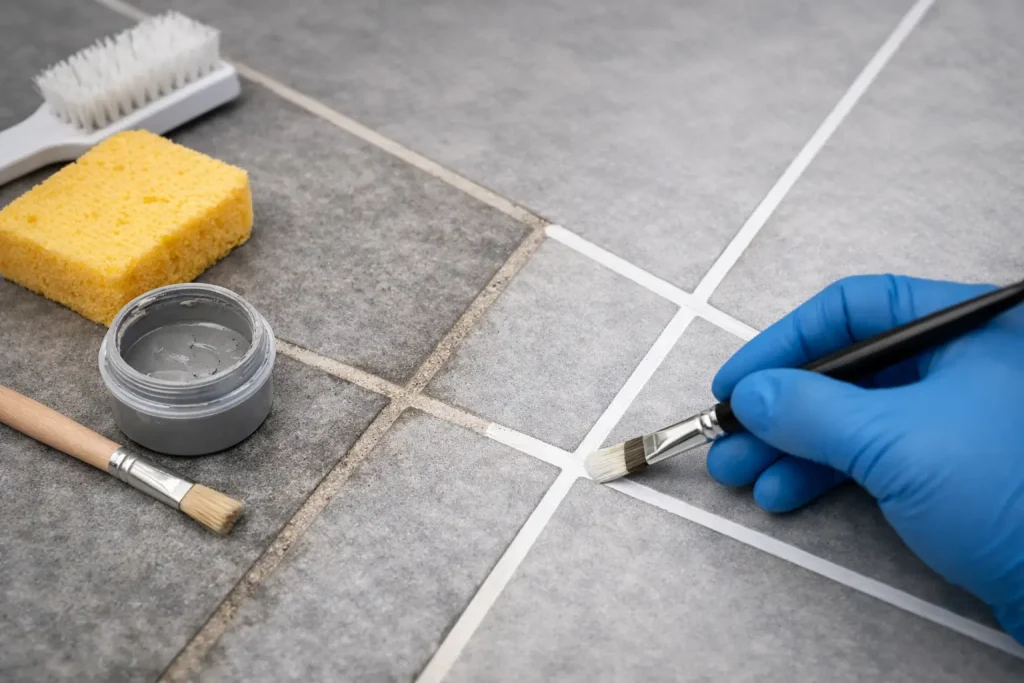
Use a small brush, applicator bottle, or tool designed for grout lines. Work in manageable sections. The idea is to coat the grout joint evenly without leaving heavy residue on the tile surface.
After application, wipe excess product from the tile before it dries there. Smooth tile makes this easier. Textured or porous tile takes more attention, so test a small area if you are unsure.
Step 5: Allow proper cure time
Once the grout is recolored, let it cure as directed before exposing it to moisture or heavy traffic. This is where patience pays off. A fully cured surface holds up better and delivers the clean, finished look people are after.
Choosing the right color
Most homeowners go one of two directions: match the original grout color or deliberately change it. Matching works well when you want the tile installation to look fresh again without changing the room’s style. A color shift works when you want a more noticeable update.
Lighter grout can brighten a space, but it may show future dirt faster in high-traffic areas. Darker grout is forgiving on floors and can create more contrast with tile. Neither is universally better. It depends on the room, the amount of traffic, and the look you want.
This is where broad color selection makes a real difference. Professional-grade systems that offer a wide range of shades make it easier to match existing grout or coordinate with new design choices instead of settling for a close-enough result.
How long does recolored grout last?
That depends on the product, the prep, and the environment. A well-applied grout color sealer on properly cleaned grout can last for years, especially on maintained interior surfaces. High-use showers, commercial settings, and heavily trafficked entries put more stress on the finish, so maintenance matters.
The good news is that recoloring is not just cosmetic when a true color sealer is used. It adds a layer of stain resistance that helps keep grout looking clean longer. That is one reason restoration-first systems are so appealing. You are not just changing the color. You are protecting the work you just did.
Common mistakes that lead to disappointing results
The biggest mistake is trying to recolor grout that is still dirty. The second is assuming every grout problem can be covered up. If the grout is failing, loose, or wet beneath the surface, no colorant will solve that.
Another common issue is choosing the wrong product. Generic coatings may look fine at first but wear unevenly or fail to bond. A professional-grade grout color sealer is designed specifically for grout lines and daily use, not just quick cosmetic coverage.
And finally, some people skip maintenance after the job is done. Harsh cleaners, acidic products, or abrasive scrubbing can shorten the life of the finish. Once the grout is restored, use a compatible cleaner to keep it looking sharp.
Is recoloring grout worth it?
If your tile is worth saving and your grout is structurally sound, recoloring is often one of the best improvement projects you can do for the money. It changes how the whole surface reads. Floors look cleaner. Showers look newer. Backsplashes look finished again.
That is why so many homeowners and pros choose restoration over replacement. It is faster, cleaner, and far more cost-effective than ripping everything out. With the right prep and a quality color sealer, the transformation can be dramatic. This Old Grout has built an entire restoration approach around that idea because it works.
If your grout lines are making the room look older than it is, do not assume replacement is your only option. Sometimes the fix is much simpler – and the before-and-after is exactly the kind of change that makes the whole space feel cared for again.
