

Grout Solutions
Stained Grout Restoration Kit: What Works
May
You scrub the floor, step back, and the tile looks better – but the grout still reads dingy, blotchy, or permanently dirty. That is usually the moment people start pricing out regrouting, only to find out how messy and expensive it can get. A good stained grout restoration kit offers a smarter fix: clean what can be cleaned, restore color where staining has set in, and add real protection so the same problem does not come right back.
For most homeowners, the real issue is not just dirt. Grout is porous, which means it absorbs mop water, spills, soap residue, hard water minerals, and tracked-in grime. Over time, even well-maintained grout can shift from its original color to something uneven and tired-looking. In kitchens, that often means grease and food stains. In showers, it is soap scum, body oils, and mineral buildup. On entry floors, it is ground-in soil that regular cleaners never fully remove.
What a stained grout restoration kit should actually do
A stained grout restoration kit should solve more than one problem. If it only cleans, it may help with surface soil but do very little for deep discoloration. If it only coats the grout, it can leave you sealing in residue or applying color over buildup that prevents proper bonding.
The best systems work in stages. First, they remove embedded grime and residue. Then they restore a uniform grout color. Finally, they leave behind stain resistance so you are not back on your hands and knees a month later. That combination matters because stained grout is rarely a one-step problem.
This is where many off-the-shelf products fall short. A basic grout pen may brighten a small area, but it often looks paint-like, wears unevenly, and does nothing for the surrounding buildup. A generic cleaner may foam up nicely, but if the grout is permanently discolored, no amount of scrubbing will bring back an even finish. Restoration works best when cleaning and protection are treated as one job.
Why cleaning alone is not always enough
There is a big difference between dirty grout and stained grout. Dirty grout has buildup sitting on or near the surface. Stained grout has absorbed discoloration into the pores, or it has lost its original appearance so unevenly that cleaning reveals patchiness instead of a fresh, consistent line.
That is why people often feel frustrated after a deep clean. The floor is cleaner, but now the grout looks even more uneven because the loose dirt is gone and the permanent staining is more obvious. In that situation, a stained grout restoration kit with a color sealer is usually the better answer.
A quality color sealer does two jobs at once. It restores the grout to a consistent color and seals the porous surface against future staining. That means you are not just covering up a cosmetic issue. You are correcting the look and improving long-term performance.
The pieces that matter in a restoration kit
Not every kit is built the same, so it helps to know what belongs in one. At minimum, you want a deep cleaner that is designed for grout and tile, not just a general household spray. It should be strong enough to break down embedded soil, soap film, and oily residue without leaving behind a slippery layer that interferes with the next step.
The second key piece is the color sealer. This is where the transformation happens. A professional-grade formula should bond to properly cleaned grout, dry to a natural-looking finish, and provide real stain protection. If the product is available in a broad range of grout colors, that is a major plus. Matching the existing shade creates a clean, believable finish, while changing to a new grout color can modernize the whole room without replacing tile.
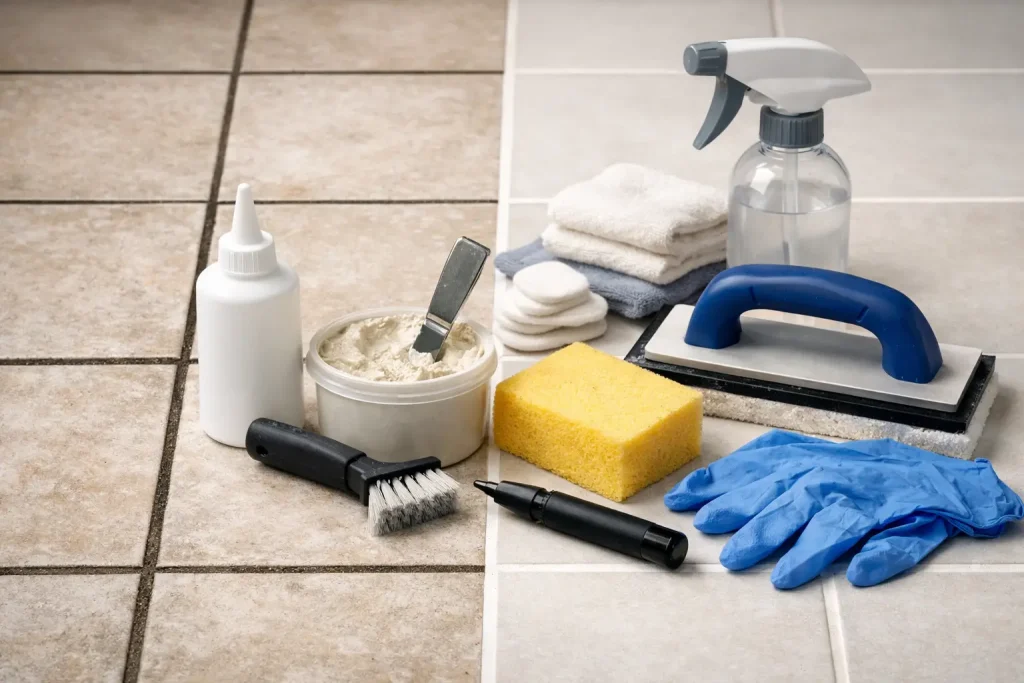
Applicators and prep tools matter too, even if they seem minor. A small brush, microfiber cloths, gloves, and clear instructions can make the project feel manageable instead of fussy. For DIY users, ease of use is not a bonus feature – it is part of whether the system succeeds.
Where a stained grout restoration kit makes the biggest difference
Floors are the obvious place, especially in kitchens, bathrooms, mudrooms, and laundry areas. These are high-traffic zones where grout darkens gradually, so homeowners often do not notice how far it has drifted until they clean one corner and see the contrast.
Showers are another strong candidate. Vertical grout joints can become stained from hard water and soap residue, while the floor may collect body oils and mineral deposits. In these spaces, cleaning first is critical. Applying color sealer over active buildup will not give you the finish or durability you want.
Property managers and landlords also get strong value from restoration kits. If tile is still sound, restoring grout is much faster and less disruptive than replacement. The visual improvement can be dramatic, which makes turn-ready units look cleaner and better maintained without a full renovation budget.
How to get professional-looking results at home
The difference between an average result and a stain-free makeover usually comes down to prep and patience. Start by making sure the grout is dry enough for evaluation. Wet grout often looks cleaner and more uniform than it really is, so if you judge it too early, you can underestimate how much restoration is needed.
Next, deep clean thoroughly. Focus on removing residue, not just brightening the surface. In showers, this may mean tackling soap scum and hard water first. On kitchen floors, grease and cooking residue can be the hidden culprit. Rinse well and let the grout dry fully before applying any color sealer.
When it is time to apply the color sealer, work in small sections. That gives you better control and makes it easier to wipe excess from the tile before it dries. A steady hand helps, but perfection is not required. The process is more forgiving than many people expect when the product is designed for DIY restoration.
It also helps to think realistically about the room. A powder room floor is a piece of cake for most homeowners. A large open-plan kitchen with heavily textured tile will take longer and require more attention to detail. Same product, different level of effort.
Trade-offs to keep in mind
Restoration is often the best option, but not every grout line should be saved. If grout is missing, crumbling, or failing structurally, a restoration kit is not a substitute for repair. The surface has to be sound enough to accept cleaning and color sealing.
There is also a difference between refreshing and changing. If you want grout to look like its original color again, matching is straightforward. If you want a much lighter shade than what is currently installed, preparation becomes even more important because inconsistencies will be more visible during application.
Texture can affect the process as well. Smooth glazed tile is generally easy to wipe clean after sealing. Rough or porous tile may need a little more care to prevent residue from settling on the tile face. That does not mean you cannot restore it. It just means the project may call for a slower, more deliberate approach.
Why long-term protection matters
The best part of using a true restoration system is not just the before-and-after moment. It is what happens six months later when the grout still looks clean and even. That is where stain protection earns its keep.
Once grout has been recolored and sealed properly, everyday maintenance gets easier. Spills sit on the surface longer instead of soaking in right away. Mop water is less likely to redeposit grime into the joints. Regular upkeep becomes less about aggressive scrubbing and more about keeping surfaces from building up in the first place.
That is one reason restoration-first brands have built such a loyal following among both homeowners and pros. A field-tested system can restore right back to new without demolition, and it can keep that finished look for years when maintained properly. For many spaces, that is a far better value than tearing out perfectly good tile just because the grout looks tired.
If your grout is stained but still structurally sound, replacement should not be your first move. A well-made stained grout restoration kit can give the room a cleaner, sharper, more finished look with a lot less cost and disruption. Sometimes the best renovation is not starting over – it is restoring what is already there and protecting it the right way.
