

Grout Solutions
9 Best Shower Tile Cleaners That Work
Jun
If your shower still looks dingy after a full round of scrubbing, the problem usually is not effort. It is product mismatch. The best shower tile cleaners are the ones matched to the actual mess on the surface – soap scum on glazed tile, mineral deposits on glassy walls, mildew in corners, or deep staining in porous grout.
That distinction matters because shower tile is rarely just tile. You are usually cleaning a combination of ceramic or porcelain, grout joints, caulk lines, metal trim, and sometimes natural stone. Use the wrong cleaner and you can waste time at best or dull, etch, or discolor the surface at worst. Use the right one and the whole shower can look restored right back to new without turning a weekend into a demolition project.
What the best shower tile cleaners actually need to do
A cleaner earns its keep in a shower when it does more than make the room smell clean. It needs to break down body oils, soap film, shampoo residue, and hard water minerals without leaving behind a haze. On grout, it also needs enough cleaning power to lift embedded grime from textured, porous lines where dirt loves to settle.
This is why all-purpose bathroom sprays often disappoint. They may freshen the surface, but they are not always strong enough for heavy buildup. Or they lean too aggressive for delicate materials. The best results usually come from thinking in categories instead of looking for one miracle bottle.
Best shower tile cleaners by cleaning problem
For soap scum and everyday film
On ceramic and porcelain shower tile, a high-quality alkaline or pH-balanced tile cleaner is usually the smartest starting point. Soap scum is not just soap. It is a sticky mix of soap residue, body oils, and minerals, so it needs a cleaner that can cut through that layered film instead of just wetting it.
This type of cleaner is your workhorse for routine maintenance. It is especially useful if the tile itself still looks decent but the shower has lost that crisp, bright finish. If your issue is mostly haze and light grime, this is often enough to make the shower feel dramatically cleaner with moderate scrubbing.
For hard water buildup and mineral scale
If you see chalky white crust, cloudy streaks, or rough-feeling spots, you are dealing with mineral deposits. The best shower tile cleaners for this job are descaling formulas made to dissolve hard water buildup. They can be very effective on ceramic and porcelain, but this is also where caution matters most.
Acid-based cleaners can damage natural stone such as marble, travertine, limestone, and some polished surfaces. They can also wear down grout over time if overused or left to sit too long. For showers with heavy mineral scale, the cleaner may be right for the tile but not for every surface around it. Read the label, test first, and do not assume stronger means better.
For grout that stays dark no matter what
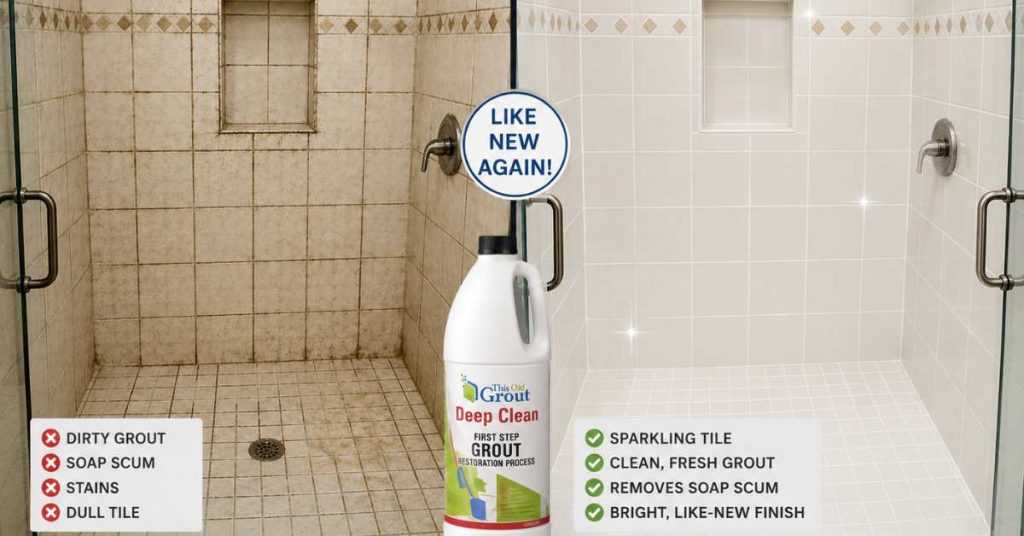
When the tile brightens up but the grout still looks brown, gray, or blotchy, you need a cleaner with enough dwell time and enough bite to pull contamination out of the grout line. This is where specialized deep cleaners outperform general bathroom sprays by a wide margin.
A true grout cleaner should loosen embedded soil so you can agitate it with a grout brush and rinse it away. If the grout has years of staining, cleaning may improve it without fully restoring the original color. That is not a failure. It just means the grout has moved from dirty to permanently discolored, which is common in older showers.
For mold and mildew staining
Dark spotting along caulk lines, in corners, or near the bottom of the shower often points to mildew or mold staining. The best cleaner here is one specifically labeled for mold and mildew removal or stain treatment. Ventilation helps, and so does drying the shower between uses, but once that staining sets in, regular soap scum cleaners usually are not enough.
There is a trade-off, though. Some mildew removers are strong and fast, but can be harsh on surrounding finishes or create fumes that make the job unpleasant. Good airflow, gloves, and careful application make a big difference.
Best shower tile cleaners by surface type
Ceramic and porcelain tile
These are the most forgiving shower surfaces. They can usually handle stronger cleaning formulas, which gives you more options for soap scum, grime, and hard water. A deep cleaner for periodic restoration followed by a gentler maintenance cleaner is often the most effective approach.
If your shower has textured porcelain tile, pay extra attention to residue. Textured surfaces trap grime more easily and need a cleaner that rinses clean rather than leaving a film behind.
Natural stone tile
Stone is where many cleaning mistakes happen. Marble, travertine, slate, and limestone need stone-safe cleaners that will not etch the finish or strip away sealers. Vinegar, bleach-heavy DIY mixes, and many acidic bathroom cleaners can do lasting damage.
For stone showers, the best shower tile cleaners are usually pH-neutral formulas designed for natural stone. They may seem less dramatic at first, but they protect the finish while handling routine buildup safely. On stone, patience and consistency beat harsh chemistry.
Grout lines
Grout deserves its own category because it behaves differently than tile. It is porous, it stains easily, and it can stay discolored even after the surface grime is gone. Deep cleaning is the first move. If the color still looks uneven after that, a color sealer can give grout a uniform stain-free makeover while adding long-term stain protection.
That restoration-first approach is often more practical than endless scrubbing. For many homeowners, the real breakthrough is realizing they do not need to replace grout just because it looks old.
How to choose the right cleaner without trial and error
Start by identifying the material. Ceramic and porcelain can handle more aggressive cleaning than natural stone. Then look at the type of buildup. Cloudy film, crusty white deposits, dark grout, and mildew staining each point to a different category of cleaner.
Next, consider the condition of the shower. If it has not had a serious cleaning in years, a maintenance spray will not be enough. You will need a deeper first-pass cleaner to reset the surface. After that, regular upkeep gets much easier.
It also helps to think in a sequence instead of a single product. Deep clean first. Maintain with a lighter cleaner after that. Restore grout color if stains have become permanent. That is how you get a lasting visual improvement instead of a short-lived clean.
A practical cleaning sequence that gets better results
For most neglected showers, start with a deep cleaner on tile and grout. Give it enough dwell time to work, then scrub with the right brush for the surface and rinse thoroughly. If hard water deposits remain, follow with a targeted mineral remover that is safe for your tile type.
Once the surface is truly clean, evaluate the grout honestly. If it is still blotchy or worn-looking, cleaning has probably done all it can do. That is the point where sealing or recoloring becomes the smarter move. This is where restoration systems from specialists like This Old Grout stand out – they are built to clean first, then protect and transform instead of just masking the issue.
For weekly upkeep, use a gentler shower-safe cleaner that removes fresh residue before it hardens into stubborn buildup. That one habit can turn a heavy scrub job from every month into a quick routine that is a piece of cake.
What to avoid when using shower tile cleaners
The biggest mistake is using the same cleaner on every shower surface. A product that cuts mineral deposits on porcelain may be risky on marble. Another common mistake is not rinsing enough. Leftover cleaner residue can attract grime or leave dull streaks that make the shower look worse, not better.
Over-scrubbing is another issue. Abrasive pads can scratch some tile finishes, wear down grout, and rough up surfaces so they collect more grime later. Firm agitation is good. Grinding away with the wrong tool is not.
And if your grout is cracking, missing, or constantly wet behind the surface, no cleaner will solve a moisture or failure problem. Cleaning improves appearance. Structural repair handles damage.
Why the best results usually come from restoration, not just cleaning
A freshly cleaned shower feels great, but many showers need more than cleaner to look professionally finished again. Grout is the usual reason. Once it is permanently stained, patchy, or impossible to keep even-looking, the shower can still read as dirty even when the tile is spotless.
That is why the best shower tile cleaners are often part of a larger plan. Clean away buildup. Protect the surface. Restore grout color where needed. Keep it maintained so the problem does not come roaring back in two weeks. That is the difference between chasing grime and actually changing how the shower looks and performs.
If your shower has been frustrating you for months, the fix may be simpler than you think. Match the cleaner to the surface, treat the real source of the buildup, and do not be afraid to restore what cleaning alone cannot fully bring back.
