

Grout Solutions
Can Vinegar Damage Natural Stone?
Jun
A quick splash of vinegar might seem harmless, especially if you already use it on glass, faucets, or soap scum. But if you are wondering can vinegar damage natural stone, the short answer is yes – and the damage can show up faster than most homeowners expect.
Natural stone looks tough because it is tough in many ways. It handles foot traffic, heat, and years of daily use. What it does not handle well, in many cases, is acid. Vinegar is acidic, and many popular stone surfaces are made from minerals that react badly to acidic cleaners. That reaction can dull the finish, leave cloudy spots, and slowly take a polished surface from sharp and reflective to flat and worn.
Why can vinegar damage natural stone?
The issue is chemistry, not brand or strength. Vinegar contains acetic acid. On acid-sensitive stone, that acid reacts with calcium-based minerals and starts breaking down the surface itself. This is called etching.
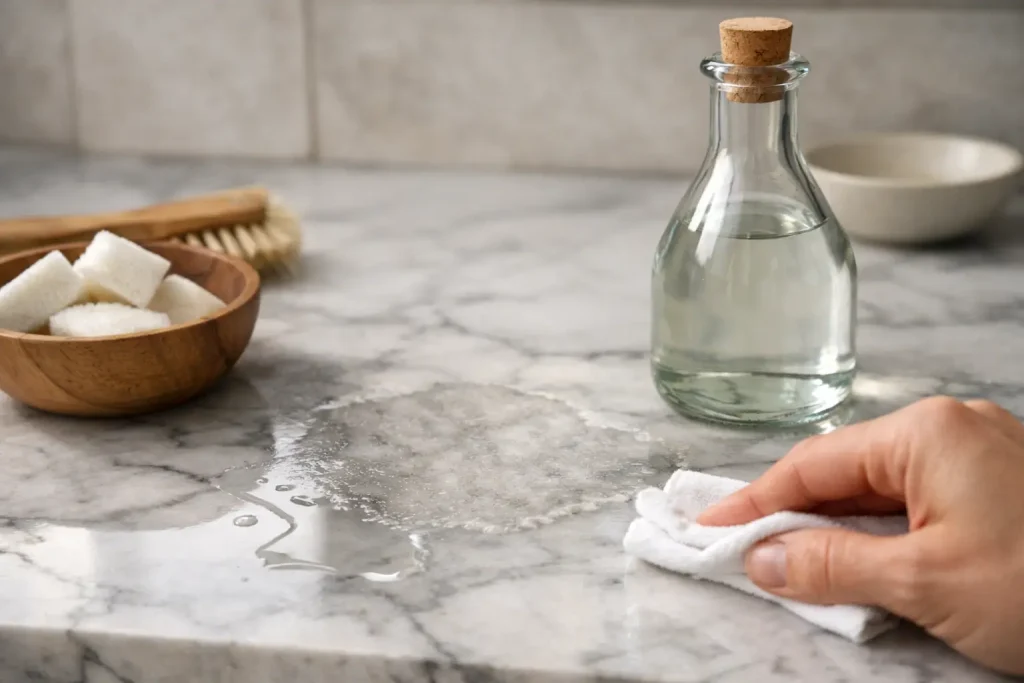
Etching is different from staining. A stain changes the color because something has soaked into the stone. Etching changes the texture or finish because the surface has been chemically altered. That is why wiping harder usually does not fix it. In many cases, the stone is clean, but it no longer looks clean because the finish has been damaged.
This matters most on polished stone, where light reflects evenly across the surface. Once vinegar creates tiny etched areas, that smooth reflection gets interrupted. The result is often a dull ring, drip mark, or patch that stands out even more when the rest of the stone is glossy.
Which stone types are most at risk?
Not every stone reacts the same way. Some surfaces are highly acid-sensitive, while others are more forgiving. The biggest red-flag stones are marble, travertine, limestone, and onyx. These are calcium-based stones, and vinegar can start etching them almost immediately.
Marble countertops and shower walls are especially common trouble spots. Homeowners often use vinegar to tackle hard water, shampoo residue, or soap scum, then notice that the stone looks hazy afterward. Travertine can be just as vulnerable, whether it is polished, honed, or tumbled. Limestone also reacts quickly, even if the finish is matte rather than shiny.
Granite is where things get a little more nuanced. Some granite is more resistant to acids than marble or travertine, but that does not make vinegar a safe everyday cleaner. Many granite surfaces still have minerals that can be affected by repeated acidic exposure, and vinegar can also weaken sealers over time. So while granite may not etch as dramatically, it is still not a smart choice for routine care.
Slate, quartzite, and some other dense stones are generally more acid-resistant, but “more resistant” is not the same as “vinegar-proof.” If you are unsure what stone you have, the safest move is to avoid acidic cleaners until you know exactly how that surface will react.
What vinegar damage actually looks like
One reason vinegar damage catches people off guard is that it does not always look dramatic right away. You may not see a deep mark or obvious chip. Instead, you might notice the surface seems dull in one area, streaky after cleaning, or strangely blotchy when the light hits it.
On countertops, vinegar damage often shows up around sinks, coffee stations, or food prep areas where acidic products are used often. On shower walls and floors, it may appear as cloudy drips or faded patches where someone tried to remove mineral buildup. On stone tile, the finish can start looking uneven, with some sections appearing cleaner than others even though the real issue is etching.
If the stone is dark, the damage may appear lighter. If the stone is light, the damage may look chalky or flat. Honed stone can be trickier because the finish is already low-sheen, but even there, etching can leave rougher-feeling spots or visible water-drop outlines.
Can vinegar damage natural stone even if it is diluted?
Yes. Diluting vinegar does not make it safe for acid-sensitive stone. It may reduce how aggressively it reacts, but the underlying problem is still there. Repeated use of a milder acid can still wear down the finish over time.
This is where a lot of DIY cleaning advice goes wrong. People hear that a vinegar-and-water mix is a natural cleaner, then apply that advice to every surface in the house. Natural stone is one of the exceptions. A cleaner can be popular, inexpensive, and effective in other rooms and still be the wrong choice here.
The same caution applies to lemon juice and many bathroom cleaners marketed for tough buildup. If the product is acidic, stone-safe use should never be assumed.
What to use instead on natural stone
The safest everyday approach is simple: use a pH-neutral cleaner made for natural stone. That gives you cleaning power without the acid risk.
For routine maintenance, warm water and a stone-safe cleaner are usually enough to remove light soil, body oils, and regular grime. Use a soft cloth or non-scratch pad, and avoid rough brushes unless the manufacturer specifically says the stone can handle them.
For showers, buildup is often a layered problem. Soap scum, hard water residue, and body products can all collect on the surface. That does not mean you need a harsher cleaner. It means you need the right one. A surface-specific cleaner designed for stone is far more effective long term than bouncing between random household acids and abrasives that slowly wear the finish down.
If the stone has grout lines, be careful there too. The wrong cleaner can affect both the stone and the grout. In restoration work, using the right sequence matters. Clean first with the proper product, correct any lingering grout appearance issues if needed, and then protect the surface so maintenance stays a piece of cake going forward.
What to do if you already used vinegar
First, stop using it right away. Rinse the surface thoroughly with clean water to remove any residue, then dry it with a soft towel.
If the stone still looks dull after rinsing, you are likely dealing with etching, not leftover cleaner. At that point, more scrubbing is usually the wrong move. Scrubbing harder can make the finish look more uneven, especially on polished marble or travertine.
Mild etching on some stones may be improved with a stone polishing product made for that exact surface type, but results vary. Deeper or widespread damage often needs professional refinishing or a restoration-specific process. This is where identifying the stone correctly really matters. What helps polished marble may not be the right fix for honed limestone.
If the issue is buildup rather than actual etching, a proper stone-safe cleaner may still restore the look. That is why it helps to check the surface in raking light. If it looks filmy, you may have residue. If it looks physically dull or feels altered, etching is more likely.
The sealer question
Many homeowners assume a sealed stone surface is protected from vinegar. That would be nice, but it is not how sealers work.
Most penetrating sealers help resist staining by slowing down absorption. They do not create an acid-proof shield on top of the stone. Vinegar can still reach and react with acid-sensitive minerals, even on a sealed surface. In some cases, repeated vinegar use can also shorten the life of the sealer itself.
Sealing is still a smart part of stone care because it supports stain protection and easier maintenance. It just should not be treated like permission to use whatever cleaner happens to be under the sink.
A smarter cleaning habit saves the finish
If you want natural stone to stay sharp, rich, and professionally finished, the best strategy is not heroic cleaning. It is consistent, surface-appropriate care.
Wipe spills quickly, especially anything acidic like juice, wine, coffee, or vinegar-based sprays. Use only stone-safe products for routine cleaning. Keep hard water and soap scum from building up to the point where you feel tempted to reach for harsher solutions. That preventive approach is what keeps restoration simple instead of turning it into repair.
For homeowners trying to keep showers, counters, and tile looking fresh without replacing anything, this is where product choice makes a visible difference. Specialized care beats guesswork every time. Brands like This Old Grout have built their reputation on that exact idea – restore first, protect next, and avoid the kind of damage that creates more work later.
So can vinegar damage natural stone? Absolutely. And the frustrating part is that the damage often comes from trying to clean the surface, not neglecting it. When the goal is a stain-free makeover and a finish that still looks right years from now, gentle and stone-safe wins every time.
