

Grout Solutions
Grout Paint vs Regrouting: Which Wins?
Jun
You notice it when the tile still looks decent but the grout makes the whole room feel tired. Maybe the lines are permanently dingy, maybe the color is blotchy, or maybe a few joints are actually breaking apart. That is where the real grout paint vs regrouting decision starts – not with a trend, but with what your grout is doing right now.
For a lot of homeowners, the wrong move is assuming every ugly grout line needs to be ripped out. In many cases, it does not. If the grout is intact but stained, faded, uneven in color, or impossible to get looking clean, a color-sealing approach can give you a stain-free makeover without the dust, mess, and cost of removal. But if the grout is loose, crumbling, missing, or failing structurally, regrouting is the right repair. The best result comes from matching the fix to the actual condition of the grout.
Grout paint vs regrouting: what is the real difference?
These two options solve different problems, even though people often compare them as if they do the same job.
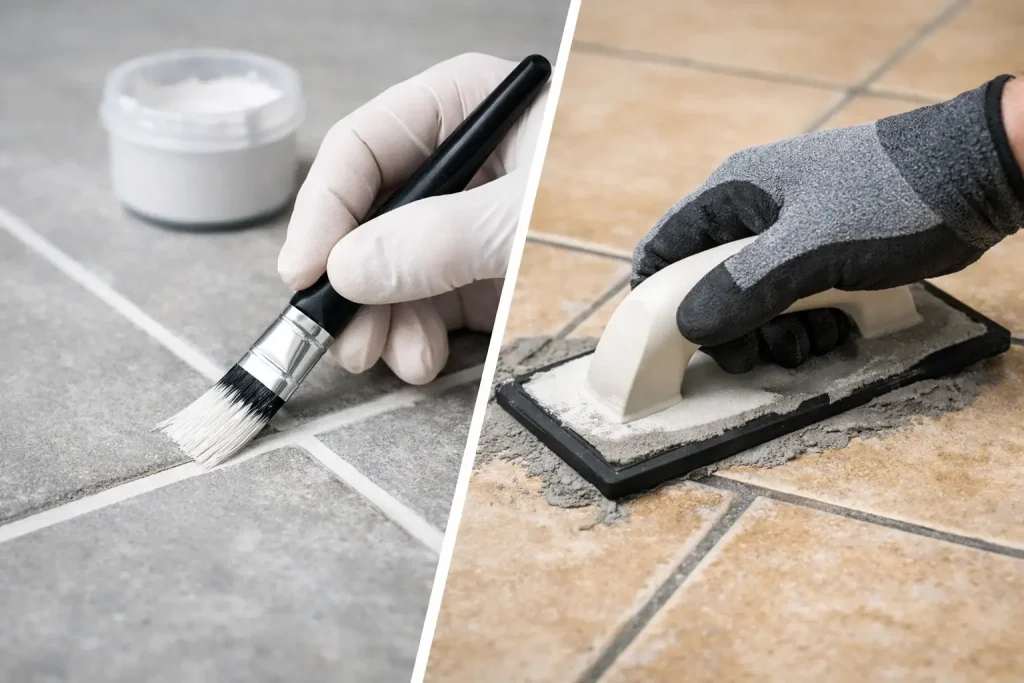
Grout paint, or more accurately a professional grout colorant and sealer, changes the appearance of existing grout while also adding a protective layer. It is a restoration-first option. You keep the grout that is already there, clean it thoroughly, then apply color to create a uniform finish and help block future staining. When the grout is still sound, this can restore the floor or shower right back to new without demolition.
Regrouting is a repair process. It means removing some or all of the existing grout and installing new grout in its place. That is the better choice when the grout has failed, not just when it looks bad. If sections are cracking out, washing away, separating from the tile edges, or letting water get where it should not, appearance is no longer the only issue.
That distinction matters because homeowners often pay for a bigger project than they need. Regrouting can absolutely be worth it, but only when the grout itself is no longer doing its job.
When grout paint makes more sense
If your grout is solid but ugly, grout paint usually wins on speed, cost, and convenience. This is especially true on kitchen floors, bathroom floors, backsplashes, and shower walls where discoloration is the main complaint.
The most common scenario is grout that has absorbed years of mop water, soap film, cooking residue, hard water minerals, or traffic soil. Even after scrubbing, it still looks uneven. In those cases, recoloring is not just a cosmetic shortcut. It is often the most practical restoration method because cleaning alone cannot reverse deep staining or patchy color loss.
A high-quality color sealer also solves another problem people underestimate: future maintenance. Freshly cleaned grout can look good for a week and then start trapping dirt again because grout is naturally porous. A color-sealing product changes that equation by restoring the color and helping shield the surface from new stains. That is a big reason restoration professionals use this approach when the goal is visible transformation with longer-lasting protection.
This option is also appealing if you want to change the look of the room without replacing tile. Dark grout can modernize a dated white tile floor. A cleaner, brighter grout line can make an older shower feel sharper and more cared for. It is one of the few updates that changes the entire surface without tearing it apart.
When regrouting is the better call
Regrouting earns its keep when grout has crossed from stained to damaged. If joints are missing in sections, powdering under light pressure, or cracked throughout a large area, color alone will not fix the problem.
The same goes for showers where water intrusion may already be a concern. If grout is separating, corners are failing, or the surface has movement-related cracking, you need repair before you think about appearance. Applying a coating over failing grout is like painting over rotten trim. It may look better briefly, but the underlying issue is still there.
Regrouting also makes sense when previous repairs were done poorly. If the grout is unevenly packed, mixed colors are showing from multiple patch jobs, or the joints are too shallow to hold up, starting over can produce a cleaner, more durable base.
There is a trade-off, though. Regrouting is slower, messier, and more technique-sensitive than most people expect. Removal can chip tile edges if done carelessly, and matching the original grout color after installation is not always easy. New grout also needs curing time and ongoing protection if you want to avoid ending up back in the same staining cycle.
Cost, labor, and disruption
This is where grout paint vs regrouting becomes a very practical conversation.
For most homeowners, recoloring existing grout is the less expensive path because you are not paying for removal, replacement material, extended labor, or the cleanup that comes with grinding out joints. It is a restoration project, not a partial demolition project. On occupied homes, that difference matters. You can often complete the work with less downtime and far less disruption to the room.
Regrouting usually costs more because it includes several stages: removal, cleanup, new grout installation, curing, and often sealing afterward. If the area is large or heavily detailed, labor adds up fast. And if the grout is only stained, that added cost does not necessarily buy you a better-looking result than a professional-grade color sealer would.
That said, if the grout is failing, regrouting is not really optional. Spending less on the wrong fix is still wasting money.
What the finished result looks like
A well-done grout colorant can produce one of the cleanest-looking finishes possible because it creates color consistency across the entire installation. That matters more than people realize. Old grout often looks bad not just because it is dark, but because some lines are darker, some are lighter, and others have random stains that make the whole floor seem dirty.
With recoloring, the transformation is immediate and uniform. It is one of the reasons homeowners often feel like the tile itself looks newer, even though only the grout changed. Professional-grade systems go a step further by combining color restoration with stain protection, which helps the finish stay sharp longer.
Regrouting can also look excellent, but results depend heavily on workmanship. New grout that is installed unevenly, haze-covered, or poorly matched to the tile can be disappointing after all that effort. Fresh grout is not automatically a better visual result. It is simply a necessary one when the old grout has failed.
How to decide without guessing
Start with a close inspection. Press on a few grout lines with your fingernail or a plastic scraper. If the grout feels hard and intact, that is a good sign. If it flakes, crumbles, or drops out, you are in regrouting territory.
Next, look at the problem pattern. If the issue is widespread staining, discoloration, or blotchy color across otherwise solid joints, a color sealer is usually the smarter fix. If the damage is localized, you may be able to repair a few bad sections and then recolor the whole area for a consistent finish.
This is often the sweet spot for homeowners who want a professional-looking result without overcommitting to a full tear-out. Restore the weak spots first, then seal and recolor the surface so the floor or shower looks uniform and stays easier to maintain.
That restoration-first mindset is exactly why many pros and DIYers choose systems designed to clean, recolor, and protect instead of replacing grout that still has years of life left. A product such as This Old Grout Color Sealer makes sense when your goal is not just covering stains, but getting a clean, durable finish that holds up in real homes.
The choice comes down to condition, not frustration
If you are tired of looking at dirty grout, it is easy to assume the most aggressive fix is the best one. Usually, it is not. Good grout that looks bad should be restored. Bad grout that is breaking down should be replaced.
That one distinction can save you time, money, and a lot of unnecessary mess. And if your grout is structurally sound, choosing a high-quality color-sealing solution can turn a worn, patchy surface into one that looks crisp, protected, and ready for everyday life again.
Before you tear anything out, take a harder look at what the grout actually needs. The best rooms are not always rebuilt. Sometimes they are simply restored the right way.
