

Grout Solutions
How to Choose a Tile and Grout Deep Cleaner
May
You notice it when the light hits the floor just right. The tile still looks decent, but the grout lines tell the real story – dark traffic lanes, shower corners with buildup, and stains that mopping never seems to touch. That is exactly where a tile and grout deep cleaner earns its keep. The right one does more than make the surface look better for a day. It cuts through embedded soil, lifts residue from the pores, and sets you up for a longer-lasting restoration instead of a quick cosmetic fix.
A lot of homeowners start with whatever is under the sink and hope for the best. Sometimes that works on fresh surface dirt. More often, it leaves behind soap film, cleaner residue, or a half-clean floor that still looks tired. Deep cleaning is different. It is about removing what regular maintenance products were never meant to handle, especially on grout, textured tile, shower surfaces, and problem areas around toilets, tubs, and kitchen prep zones.
What a tile and grout deep cleaner should actually do
A true deep cleaner needs to break down the grime that settles below the surface. Grout is porous, which means it holds onto grease, tracked-in dirt, hard water minerals, soap scum, and old cleaning residues. Tile can have texture, pits, or a matte finish that traps the same debris. If a cleaner only brightens the top layer, the floor may still look blotchy after it dries.
That is why stronger, targeted formulas matter. A tile and grout deep cleaner should loosen embedded buildup so it can be scrubbed away and rinsed off cleanly. It should also work without leaving a film that attracts new dirt. On restoration jobs, this step matters even more because any leftover residue can interfere with sealing, recoloring, or stain protection.
There is a trade-off, though. Stronger is not always better for every surface. Ceramic and porcelain tile can typically handle more aggressive cleaning than polished natural stone. The product that works beautifully on a dingy laundry room floor may be the wrong choice for marble, travertine, or other acid-sensitive surfaces. Good results come from matching the cleaner to the problem and the material.
Match the cleaner to the surface and the mess
The fastest way to get disappointed is to treat every tile surface the same. Showers deal with soap scum, body oils, and hard water. Kitchen floors pick up grease and food residue. Entryways collect fine grit and ground-in soil. Each mess responds differently.
For shower tile and grout
In a shower, buildup often stacks in layers. Hard water minerals trap soap residue, which traps more dirt, which leaves grout looking darker than it really is. A tile and grout deep cleaner for showers should be able to cut through that layered residue without damaging the surface finish. If you have natural stone in the shower, the cleaner needs to be stone-safe. That is non-negotiable.
For floors in high-traffic areas
On floors, especially in kitchens, hallways, and mudrooms, the main issue is usually embedded soil and cleaner buildup. Many floors look dull not because they are permanently stained, but because residue has settled into the grout and textured tile. In that case, a deep cleaner with real degreasing and soil-lifting power can make a dramatic difference.
For natural stone and specialty surfaces
Stone needs a more careful approach. Acidic or harsh chemicals can etch the finish and create a whole new problem. If your tile is marble, limestone, travertine, slate, or another natural material, use a formula specifically designed for those surfaces. Restoration-first cleaning saves money only if it preserves the material you already have.
Signs you need deep cleaning, not routine cleaning
A maintenance cleaner is meant for regular upkeep. It is ideal once the surface is already in good shape. But if the grout lines still look uneven after mopping, if water beads oddly in some areas and not others, or if the floor feels sticky even when it is clean, you are likely dealing with buildup that routine products cannot remove.
Another sign is when grout color looks inconsistent. Sometimes that is true staining. Other times it is compacted dirt and residue sitting in the pores. Deep cleaning helps reveal what is actually going on. Once the surface is truly clean, you can make a better decision about whether you simply need maintenance, a protective sealer, or a full color refresh.
How to use a tile and grout deep cleaner for the best result
Technique matters almost as much as the formula. Start by dry removing loose dust and grit so you are not turning surface soil into muddy residue. Apply the cleaner generously enough to wet the grout lines and let it dwell for the recommended time. That dwell time is where the chemistry starts doing the heavy lifting.
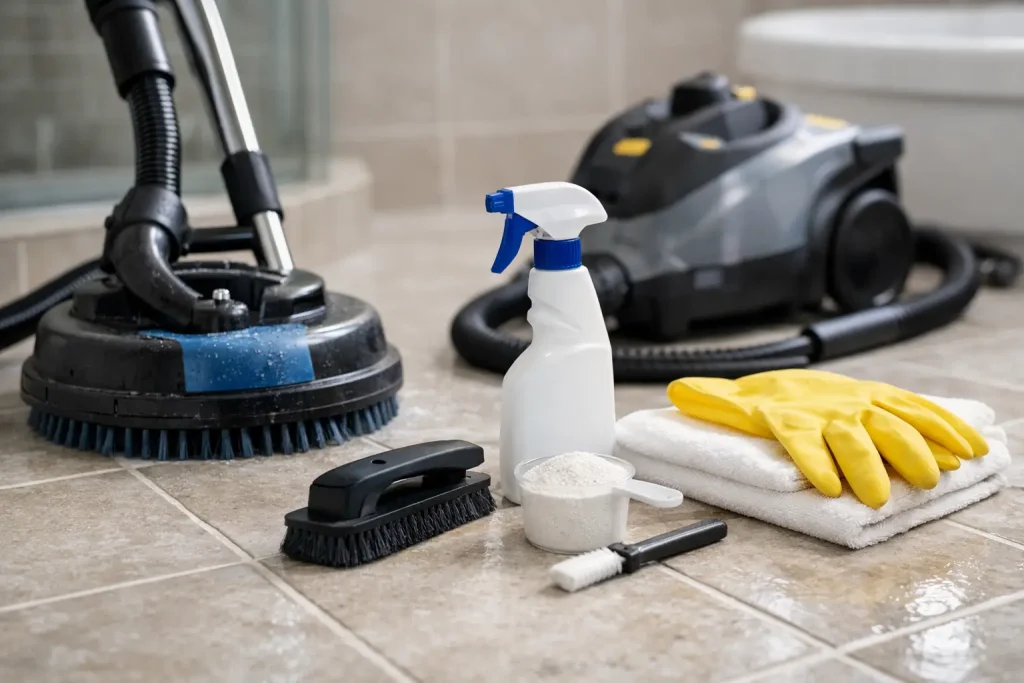
Then scrub with a brush that has enough stiffness to work the grout lines without damaging the surrounding surface. On larger floors, work in sections so the cleaner stays active and does not dry out before you can agitate it. Rinse thoroughly. That step gets skipped all the time, and it is one reason floors can still look hazy after a cleaning session.
If the grout has been neglected for years, one pass may not be enough. That does not mean the cleaner failed. It usually means the buildup is layered and needs a second treatment. Deep restoration often happens in stages, especially in older showers and heavily used family spaces.
Deep cleaning is the setup, not the finish line
This is the part many people miss. Cleaning alone does not stop grout from staining again. Once porous grout is open and clean, it is also vulnerable. That is why a smart restoration plan moves from deep cleaning to protection.
For some floors, that means sealing. For others, especially where grout color has become permanently uneven, it means using a color sealer that restores a uniform look while adding stain protection at the same time. That approach can save homeowners from the cost and mess of regrouting when the grout is structurally sound but cosmetically worn out.
A restoration-first system is what makes the results last. Deep Clean removes the buildup. A maintenance product helps keep it from coming back. And if the grout still looks blotchy after proper cleaning, a color sealer can restore right back to new with a more consistent, professional finish. That is often the point where a frustrating cleaning problem turns into a real stain-free makeover.
When a cleaner will help – and when it will not
A tile and grout deep cleaner can remove a surprising amount of soil, soap scum, and residue. It can even improve the look of grout that appears badly stained. But there are limits.
If grout is cracked, missing, powdery, or damaged by harsh chemicals, cleaning will not repair it. If tile has permanent etching or mineral deposits that have physically altered the finish, the solution may involve restoration beyond cleaning. And if a shower has failing caulk, moisture issues, or mold inside the wall system, no surface cleaner is going to fix the underlying cause.
That is not bad news. It just means better decisions. Use deep cleaning to reveal the true condition of the surface. Once you can see what is dirt, what is staining, and what is actual damage, the next step becomes much clearer.
What homeowners and pros both want from a deep cleaner
Whether you are cleaning your own bathroom or maintaining units between tenants, the goal is usually the same. You want visible improvement without replacing materials that still have life left in them. You want a product that works hard, rinses clean, and supports the next step if more restoration is needed.
That is why professional-grade systems have such strong appeal for DIY users. They are designed for real-world buildup, not just light wipe-downs. And when they are paired with the right maintenance and protection products, they help surfaces stay cleaner longer instead of cycling back to the same dingy look a few weeks later.
This Old Grout has built its reputation around that kind of practical restoration – helping homeowners and pros clean deeply, protect what they have, and avoid unnecessary replacement when the better answer is simply to restore the surface the right way.
If your tile still has good bones but the grout has lost the battle with daily life, start with deep cleaning. A good surface does not always need to be torn out. Sometimes it just needs the right cleaner, the right follow-up, and one honest afternoon of putting things back in order.
