

Grout Solutions
Tile Grout Cleaning Home Remedies That Work
May
You notice grout when it stops blending in. One day the bathroom floor looks fine, and the next the lines are dark, patchy, and making the whole room feel older than it is. That is why tile grout cleaning home remedies are so popular – they promise a quick, low-cost fix with ingredients already sitting in the cabinet.
Sometimes those remedies do help. Sometimes they only lighten the surface for a few days. And sometimes they make a grout problem worse, especially if the grout is already worn, porous, or sealed with a coating that does not play well with aggressive scrubbing. The real win is knowing which home methods are useful, which ones are overhyped, and when cleaning alone will not get you back to a clean, uniform finish.
When tile grout cleaning home remedies actually help
Home remedies work best when grout is dealing with fresh or moderate surface soil. Think tracked-in dirt on a kitchen floor, soap residue in a guest bath, or light dinginess in a laundry room. In these cases, grime is sitting on or near the surface, and a mild cleaner with a little dwell time can loosen it enough to scrub away.
They are less effective when grout has deep staining, years of embedded oils, mineral buildup, mildew staining, or uneven discoloration from old cleaners. Grout is porous by nature. Once contamination settles below the surface, a simple pantry solution may improve the look without fully restoring the color. That is where homeowners often get frustrated – the tile looks cleaner, but the grout still looks tired.
The surface matters too. Ceramic and porcelain tile are usually more forgiving. Natural stone is not. If your grout sits next to marble, travertine, limestone, or other acid-sensitive stone, some common home remedies can etch the tile before you even realize it.
The safest home remedies to try first
If you want the best shot at improvement without creating a bigger mess, start mild and controlled. Warm water with a few drops of dish soap is still one of the smartest first steps. It sounds basic because it is, but it can remove body oils, cooking residue, and everyday film surprisingly well. Use a soft grout brush or a medium nylon brush, not a wire brush, and work in small sections.
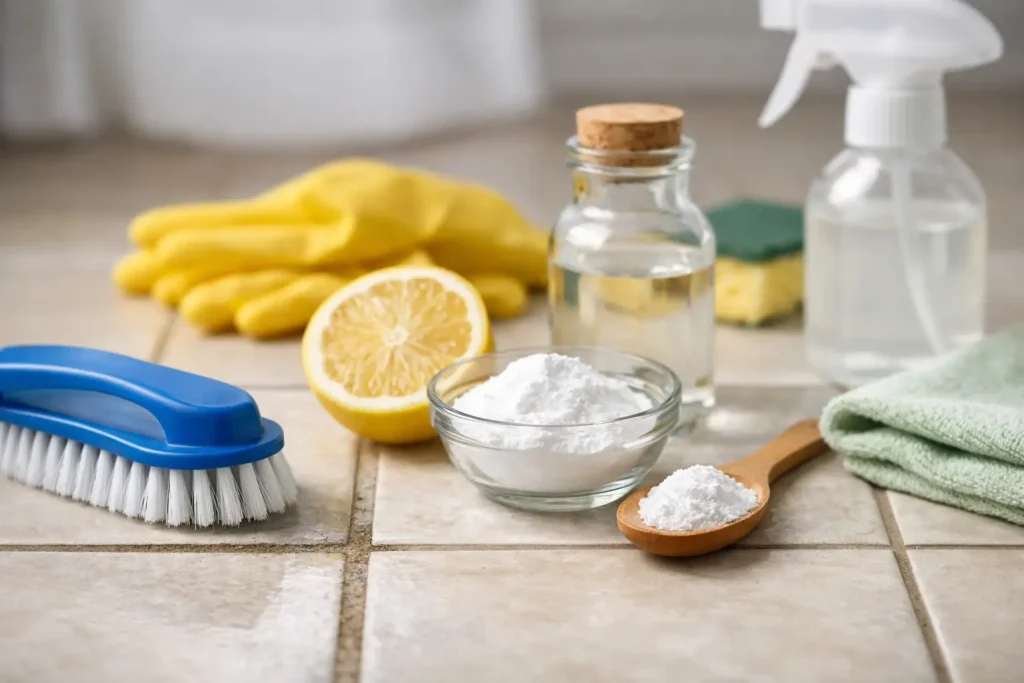
Baking soda is another common option, especially for floor grout. Make a paste with water, spread it onto the grout lines, let it sit for 10 to 15 minutes, then scrub gently. Baking soda adds light abrasion, which can help break up surface grime without being as harsh as many powdered cleansers. It is not magic, but it is a reasonable next step when soap and water are not enough.
Hydrogen peroxide can help with organic staining and bathroom discoloration. Many homeowners mix it with baking soda to form a paste. Used carefully, this can brighten dingy grout. The key word is carefully. Test first in an inconspicuous spot, avoid oversaturating the area, and do not assume brighter means restored. If the grout lightens in some places but not others, the issue may be deeper than a surface stain.
Steam can also be useful if you have a quality steam cleaner designed for grout and hard surfaces. It loosens buildup with less reliance on chemicals, which many homeowners like. But steam is not a cure-all. If grout is crumbling, cracked, or already compromised, high heat and moisture can expose just how much wear is there.
Home remedies that need more caution than people think
The internet loves vinegar. For some cleaning jobs, fair enough. For grout, it depends. Vinegar can cut soap scum and mineral haze, but it is acidic. Repeated use can slowly wear cement-based grout, especially if the grout is older or unsealed. Around natural stone, vinegar is a hard no.
Bleach is another one that gets recommended fast and used too often. Yes, it can whiten some stains and kill surface mildew. It can also create uneven color, weaken grout over time, and leave you chasing a temporary cosmetic fix. If your grout is tan, gray, or any color other than white, bleach may leave the whole floor looking more blotchy instead of cleaner.
Lemon juice falls into the same caution category as vinegar. It smells fresh, but it is still acidic. DIY cleaning should not come at the expense of the grout itself.
That is the pattern with a lot of aggressive home fixes. They can make grout look better for a moment while shortening the life of the surface. If you have to scrub hard enough to feel like you are sanding the grout away, the method is not worth it.
How to use tile grout cleaning home remedies without damaging grout
Technique matters more than most people expect. Start by dry-vacuuming or sweeping the area so you are not grinding loose grit into the grout while scrubbing. Apply your cleaner to a small test section first. Give it a few minutes to work. Then scrub with a brush made for grout lines, rinse with clean water, and wipe away the residue.
Do not flood the floor. Grout absorbs moisture, and too much liquid can carry dirt deeper into porous lines or linger in already damp shower areas. Controlled application is better than soaking everything and hoping for the best.
It also helps to reset your expectations. A single cleaning session may remove buildup, but it will not reverse permanent staining or restore missing pigment. If the grout is still uneven after two careful rounds of cleaning, you are probably not looking at dirt anymore. You are looking at wear, staining, or old damage.
Why clean grout still looks dirty sometimes
This is the part homeowners rarely hear soon enough. Grout can be clean and still look bad. Once it absorbs stains, fades unevenly, or starts showing patchy discoloration, more scrubbing will not recreate a uniform appearance. You can spend a Saturday chasing cleaner lines and still end up with grout that looks old because the problem is no longer just soil.
Bathrooms show this especially well. Hard water minerals, soap residue, and moisture create layer after layer of buildup. Even after the top film is gone, the grout may still be discolored underneath. Kitchen grout has its own version of the same problem with grease, spills, and foot traffic. In both spaces, homeowners often assume replacement is next. It is not always.
If the grout is structurally sound but permanently stained, a restoration-first approach usually makes more sense than endless DIY experiments. That is where deep cleaning and recoloring can do what home remedies cannot: deliver a consistent, finished look while adding long-term stain protection.
When to stop scrubbing and switch strategies
There are a few clear signs you are past the point of simple home remedies. If the grout dries lighter in some spots and darker in others, if stains return quickly, if the lines stay blotchy after cleaning, or if the grout looks worn no matter how clean the tile gets, the issue is deeper than surface dirt.
This is also true when you are preparing a home for sale or turning over a rental. You need results that look intentional, not half-improved. A floor or shower that is technically cleaner but still looks tired does not give you that stain-free makeover people notice right away.
For those situations, specialized grout cleaners are usually the smarter move because they are built for embedded soil, soap scum, and restoration prep. And if the grout color itself is the problem, color sealing can restore it right back to new while helping block future staining. That is a very different result from cleaning alone.
A professional-grade system can save time, especially when you have already tried the baking soda route twice and are still staring at dark lines. This Old Grout has built its approach around that exact gap between everyday cleaning and full replacement – helping homeowners get a uniform finish without tearing out perfectly serviceable grout.
A smarter way to think about grout care
Use home remedies for maintenance and light cleanup. They are affordable, accessible, and in the right situation, perfectly fine. Just do not ask them to solve problems they are not built to solve. Grout is not a painted wall that bounces back with one wipe. It is a porous material that shows years of use.
The best long-term results usually come from matching the fix to the problem. Light dirt needs gentle cleaning. Heavy buildup needs a stronger cleaning system. Permanent discoloration needs restoration, not more elbow grease. And once grout looks good again, protecting it matters just as much as cleaning it.
If your grout responds to a simple pantry remedy, great. You got an easy win. If it does not, that does not mean your floor or shower is beyond saving. It usually just means it is time to stop experimenting and give the surface the kind of solution that was designed to bring it back.
