

Grout Solutions
What Is Tile and Grout Cleaning?
May
That moment when your tile still looks dull after mopping is usually when the real question shows up: what is tile and grout cleaning, exactly? For most homeowners, it starts with frustration. The floor gets cleaned, the shower gets scrubbed, and somehow the grout still looks darker, patchy, or permanently dirty. The issue is that tile and grout are not the same surface, and they do not respond the same way to everyday cleaning.
What is tile and grout cleaning?
Tile and grout cleaning is the process of removing embedded dirt, soap scum, hard water residue, grease, mildew, and stains from both the tile surface and the porous grout lines between tiles. It goes beyond a quick mop or spray-and-wipe routine. The goal is to lift buildup that standard household cleaners often leave behind, restore a more even appearance, and prepare the surface for ongoing protection if needed.
That last part matters. True tile and grout cleaning is not just cosmetic. On many surfaces, especially older bathroom tile, kitchen floors, and entryways, the cleaning step is also what reveals whether the grout simply needs a deep clean or whether it has absorbed stains so deeply that sealing or recoloring is the smarter fix.
Why grout gets dirty so fast
Tile is usually the easy part. Many tile surfaces are relatively dense and less absorbent, so dirt tends to sit on top. Grout is different. Cement-based grout is porous, which means it can absorb moisture, oils, spills, and grime. Once that material settles into the pores, regular mopping can actually make things worse by pushing dirty water across the lines again and again.
In showers, the problem is often soap scum, body oils, shampoo residue, and mineral deposits from hard water. On floors, especially in kitchens and high-traffic areas, grout picks up grease, tracked-in soil, and residue from improper cleaners. Some cleaners leave a film that attracts even more dirt, so the floor starts looking dingy again almost immediately.
This is why people often say, “I clean my tile all the time, but the grout still looks bad.” They are usually cleaning the surface, not fully removing what is trapped below it.
What tile and grout cleaning actually includes
A proper tile and grout cleaning process usually has a few stages. First comes surface soil removal. That clears away loose dust, dirt, and debris so the cleaner can reach the buildup instead of sitting on top of it.
Next comes the deep cleaning step. This is where a targeted cleaner is used to break down the specific type of contamination on the surface. In a shower, that may mean cutting through soap scum and mineral buildup. On a kitchen floor, it may mean loosening grease and ground-in traffic soil. The right chemistry matters because not every stain responds to the same product.
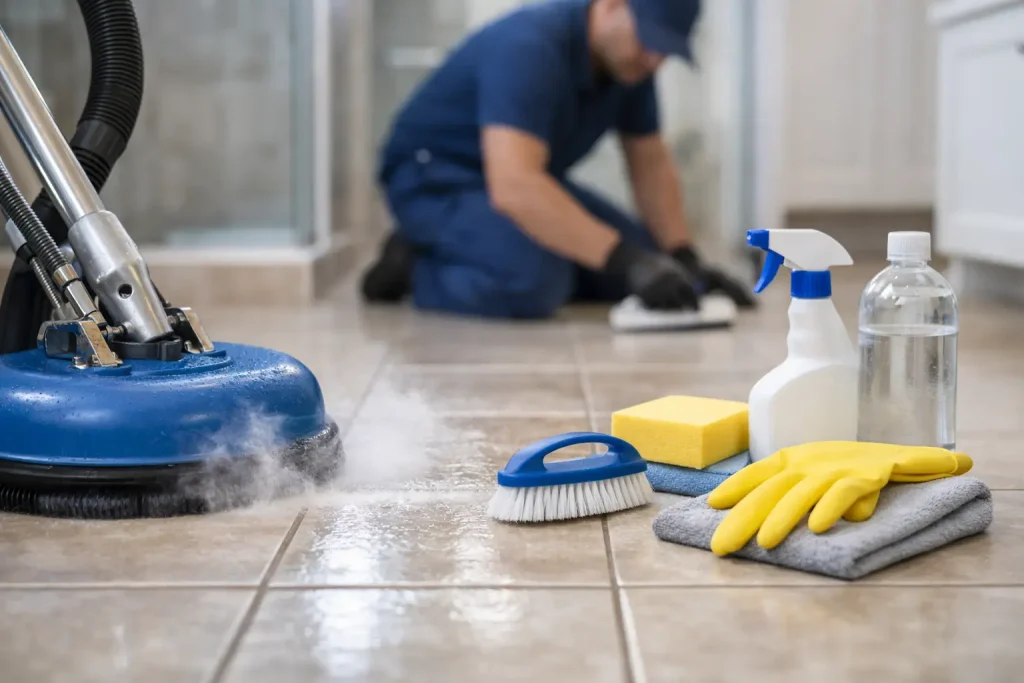
Then comes agitation and extraction. That can mean hand scrubbing with the right brush, machine scrubbing, or professional extraction methods that lift suspended soil from the grout lines. If the buildup has been sitting for years, one pass may not be enough.
After the surface dries, the real condition of the grout becomes easier to see. Sometimes it looks dramatically better. Sometimes it is cleaner but still discolored because the stain has penetrated the grout itself. That is where restoration decisions come in.
Cleaning vs. restoring grout
This is one of the biggest misunderstandings around the topic. Cleaning and restoring are related, but they are not the same thing.
Cleaning removes soil and residue. Restoration addresses grout that is worn, blotchy, permanently stained, or uneven in color. If a grout line has turned dark from years of moisture and contamination, deep cleaning may improve it. But if the original color is gone or stains have become part of the grout, no cleaner can always bring it fully back.
That is when a color sealer can make more sense than endless scrubbing. Instead of tearing out the grout and starting over, you clean it thoroughly, apply a color sealer, and create a fresh, uniform look while also adding stain protection. For many homeowners and property managers, that is the difference between a weekend project and a full replacement job.
Where tile and grout cleaning is most needed
Bathrooms are the obvious trouble spot, but they are not the only one. Showers collect soap scum, mildew staining, and hard water deposits. Bathroom floors deal with moisture, hair products, and everyday traffic. Kitchen floors take on grease, food spills, and tracked-in dirt. Entryways can be even worse because they gather mud, grit, and outdoor residue.
Tile and grout cleaning is also common on backsplashes, laundry rooms, mudrooms, and commercial restrooms. The type of tile matters too. Ceramic and porcelain are usually durable, but natural stone needs more caution. Acidic or harsh cleaners that may be fine on some ceramic tile can damage stone surfaces and certain finishes.
So if you are asking what is tile and grout cleaning, the better follow-up question is often, what kind of tile and grout are you dealing with? The answer affects the safest and most effective method.
Can you do it yourself?
Yes, often you can. A lot depends on the condition of the surface and your expectations. If the grout is dirty from buildup, a focused DIY deep clean can produce a major before-and-after difference. If the surface has years of neglected staining, multiple layers of residue, or delicate stone involved, the job may take more than a basic store-bought spray.
DIY works best when you use products designed for the specific problem instead of whatever happens to be under the sink. A deep cleaner for heavy soil, followed by a maintenance cleaner for routine upkeep, usually performs better than repeated use of harsh general-purpose chemicals. And if the grout is clean but still ugly, restoration products can take it from “better” to “looks new again” without demolition.
That restoration-first approach is a big reason many homeowners skip regrouting. If the grout is still structurally sound, replacing it can be messy, expensive, and unnecessary.
What professional tile and grout cleaning does differently
Professional service usually speeds up the process and improves extraction. Pros know how to identify residue, staining, and surface type before choosing a method. They also have access to stronger systems for agitation and rinsing, which can make a big difference on large floors or heavily soiled showers.
But professional cleaning still has limits. If grout has permanent discoloration, even a very skilled technician may recommend sealing or recoloring after cleaning. That is not a sign the cleaning failed. It is simply the reality of porous grout that has absorbed years of staining.
A good result often comes from combining both steps – first remove the buildup, then protect and refresh the grout so it stays looking cleaner longer.
How to keep grout from getting dirty again
The best tile and grout cleaning results do not come from one heroic scrub session. They come from the follow-up. Once grout is cleaned, keeping it that way is much easier if you use the right maintenance routine.
That means using a residue-free cleaner, not over-wetting floors, rinsing showers regularly, and avoiding products that leave shine-enhancing films behind. Sealing also helps, especially in high-use areas. And if your grout color is uneven or prone to staining, a color sealer can do double duty by improving the appearance and creating a barrier against future soil.
This is where a professional-grade system really pays off. Deep clean first, maintain with the right cleaner, and protect the grout before the same problem returns. That is how surfaces stay restored instead of slipping back to square one.
When cleaning alone is not enough
If your grout still looks spotted, dark, or tired after deep cleaning, you are probably not dealing with surface dirt anymore. You are dealing with damage, staining, or old grout that has simply lost its original appearance. At that point, more scrubbing usually means more effort with less payoff.
A restoration system can be the smarter move. This Old Grout has built its reputation around exactly that idea: clean what can be cleaned, then restore what no longer responds to cleaning alone. For homeowners who want a stain-free makeover without ripping out perfectly usable tile, that approach can feel like a piece of cake compared to full replacement.
Tile and grout cleaning is really about getting honest about what the surface needs. Sometimes it needs a deep clean. Sometimes it needs protection. Sometimes it needs a fresh, uniform color to restore right back to new. Once you know the difference, the path forward gets a whole lot easier.
