

Grout Solutions
Best Soap Scum Remover for Tile Shower
Jun
You usually notice soap scum in the worst light possible – when the shower is dry, the tile looks cloudy, and the grout lines suddenly seem darker than they did last week. If you are looking for the best soap scum remover for tile shower surfaces, the real goal is not just getting rid of that dull film. It is restoring the clean, bright finish underneath without damaging tile, grout, or stone in the process.
That is where a lot of homeowners get frustrated. Soap scum looks simple, but it is not just soap. In most showers, it is a mix of body oils, shampoo residue, hard water minerals, and leftover cleaner that slowly builds into a stubborn layer. On tile walls and floors, that film can cling tightly to textured surfaces and settle into grout joints, making the whole shower look older than it really is.
What makes a soap scum remover for tile shower surfaces actually work
The best cleaner for this job has to do more than smell strong or create a lot of foam. It needs enough cleaning strength to break apart oily residue and mineral haze, but it also has to be appropriate for the material you are cleaning. A glazed ceramic wall tile can tolerate products that would be a bad idea on marble or travertine. Cement grout can hold onto buildup more aggressively than the tile around it. Epoxy grout behaves differently again.
That is why there is no single answer that fits every shower. A good soap scum remover for tile shower surfaces should match the surface first, then the severity of the buildup. If the shower just has a light film from daily use, a maintenance cleaner may be enough. If the tile feels waxy, looks hazy, and the grout is turning dingy, you usually need a deeper restoration clean before maintenance products will make a difference.
In practical terms, the right product should rinse clean, work within a reasonable dwell time, and lift buildup without forcing you to scrub for half an hour on one wall. That last part matters. Excessive scrubbing is often a sign the cleaner is not doing enough of the work.
Why generic shower sprays often disappoint
Many all-purpose bathroom cleaners are built for convenience, not restoration. They may freshen up a fairly clean shower, but once soap scum thickens and hard water joins the party, those sprays can start skating over the problem instead of breaking it down.
Some products also leave their own residue behind. At first, the surface looks shiny. A few days later, the tile is cloudy again because cleaner residue is now mixing with fresh moisture and soap. If you have ever cleaned your shower only to feel that draggy film still on the tile, that is usually what happened.
There is also the surface safety issue. Harsh acids and abrasive powders can seem like a quick fix, but they are not ideal for every shower. They can etch natural stone, wear down polished finishes, and rough up grout over time. Once a surface gets microscopically rougher, it actually attracts buildup faster. So the shower may look better for a day and worse in the long run.
How to choose the best soap scum remover for tile shower problems
Start by identifying your shower material. Ceramic and porcelain tile are typically the easiest to clean because they have a durable finished surface. Standard grout, however, is porous and loves to trap grime. Natural stone showers need more care because acidic or aggressive cleaners can permanently dull the finish.
Then look at the type of buildup. If the film is white and chalky, hard water is likely part of the problem. If it feels greasy or sticky, soap and body oil are more dominant. Most showers have both, which is why a deep cleaner designed for buildup removal tends to outperform a general daily spray.
A professional-grade approach usually works best in two stages. First, use a heavier-duty cleaner to remove existing scum, embedded grime, and mineral film. Then switch to an easier maintenance product that prevents the shower from sliding back to square one. That restoration-first mindset saves time because you are not asking a light cleaner to fix heavy buildup it was never designed to remove.
For grout that still looks blotchy after cleaning, the issue may no longer be dirt alone. Grout can stain, discolor, or wear unevenly over time. In those cases, deep cleaning gets you part of the way, but sealing or recoloring may be what restores the finished look.
The right cleaning sequence matters more than people think
A lot of shower cleaning fails because the order is wrong. People spray a product onto a dry wall, wipe it off too fast, and expect years of buildup to disappear. Tile and grout cleaning is much more effective when you give the surface a little prep and the cleaner enough contact time.
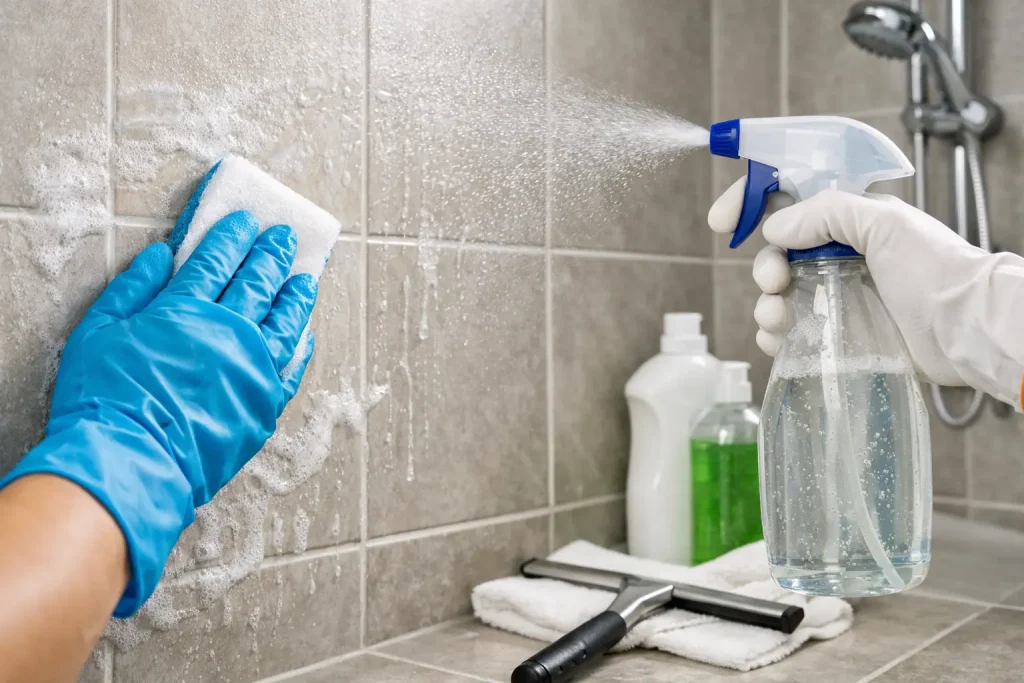
Start by rinsing the shower with warm water. That softens surface residue and helps the cleaner spread more evenly. Apply your soap scum remover generously, especially to lower wall sections, corners, and around fixtures where buildup tends to be thickest. Let it dwell according to the product directions. Then agitate with a non-scratch pad, sponge, or appropriate brush for grout lines.
Rinse thoroughly. This part is easy to rush, but it makes a big difference. Any loosened residue or leftover cleaner needs to be fully removed or the surface can dry cloudy. If the shower has not been deep-cleaned in a long time, a second round is normal. It does not mean the cleaner failed. It usually means the buildup had multiple layers.
Tile walls can brighten up fast, but grout often needs extra attention
Homeowners are often surprised that the tile starts looking cleaner before the grout does. That is normal. Tile has a more finished surface, while grout acts almost like a sponge for soap residue, minerals, and everyday grime.
If the grout is still dark, yellowed, or uneven after the soap scum is gone, you may be looking at permanent staining or old sealer failure rather than active residue. This is where restoration products earn their keep. A deeper cleaning step can remove what is sitting on the surface, but a color sealer can take grout the rest of the way by restoring a uniform appearance and adding long-term stain protection at the same time.
That kind of system is especially useful in older showers where the tile itself is still perfectly serviceable. Instead of replacing grout or living with a tired-looking shower, you clean away the buildup, restore the grout color, and protect it from future staining. For many homeowners, that is the piece of cake solution they were hoping existed.
What to avoid when removing soap scum from shower tile
Steel wool, stiff metal brushes, and highly abrasive powders are risky choices. They can scratch tile finishes, damage fixtures, and rough up grout. Bleach is another common misstep. It can help with some organic stains, but it is not a strong soap scum remover, and it does little for mineral-heavy haze. In some cases, it can also create fumes or discolor nearby materials.
Mixing cleaners is also off the table. Bathroom products can react in dangerous ways, and stronger is not always smarter. A cleaner designed specifically for shower buildup is safer and usually more effective than experimenting under the sink.
If your shower includes natural stone, caution matters even more. Acid-based soap scum products that work on ceramic tile can etch marble, limestone, and travertine. For those surfaces, you need stone-safe chemistry, slower cleaning, and a little patience.
How to keep soap scum from coming right back
The best way to maintain results is to make the shower harder for buildup to stick to in the first place. A quick rinse after use helps. So does wiping down wet walls with a squeegee or microfiber towel a few times a week. It sounds simple because it is, and it works.
Use a maintenance cleaner regularly instead of waiting for full haze to return. Once heavy soap scum hardens, every cleaning session takes longer. A lighter but consistent routine keeps surfaces brighter and protects the work you already put in.
For grout, long-term protection matters. If the grout is unsealed or worn, it will keep grabbing onto residue and moisture. A professional-grade restoration system from a specialist like This Old Grout can help move the shower from constant cleanup mode to a more durable, stain-resistant finish.
A clean shower should not feel like a weekly battle. When you choose a soap scum remover that fits your tile, treat grout like the separate surface it is, and follow up with protection instead of just more scrubbing, the whole space starts looking newer again – not temporarily cleaner, but restored right back to new.
